

A Grand Cru Classé estate with production records extending to 1365, Château Smith Haut Lafitte farms biodynamically in Martillac's gravel-heavy Pessac-Léognan soils. Winemaker Fabien Teitgen oversees a programme that includes horse-drawn viticulture, amplifying the mineral character the Graves is known for. The Pearl 4 Star Prestige rating (2025) places it firmly within Bordeaux's most considered tier of classified estates.
 Discover on Pearl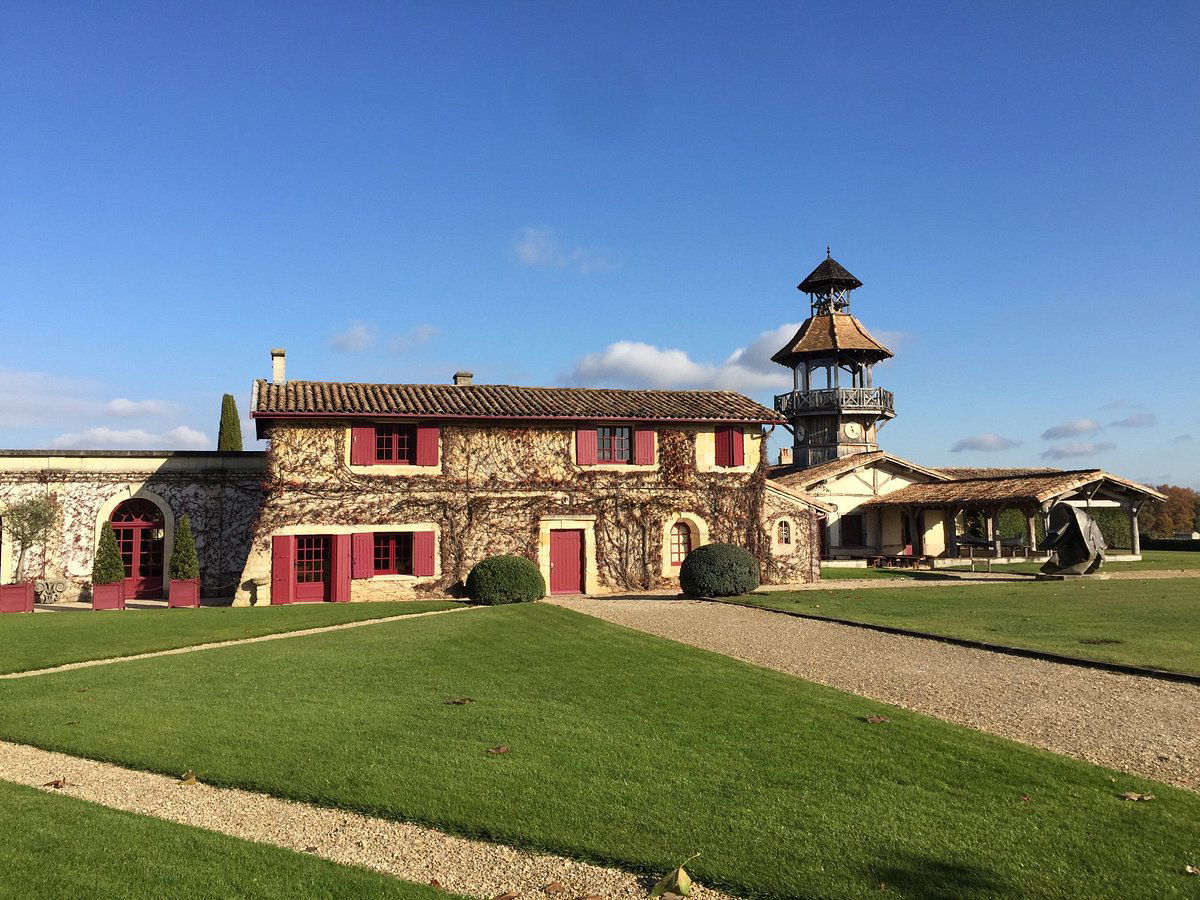
Gravel, Time, and the Logic of the Graves
The Pessac-Léognan appellation sits on some of the oldest classified wine-growing land in Bordeaux. Drive south from the city through the suburban sprawl toward Martillac and the vineyards eventually assert themselves, the gravel-heavy soils of the Graves giving way to a working estate where the rhythms of the land still set the pace. Château Smith Haut Lafitte belongs to this territory in a way that reaches back to 1365, making it one of the few addresses in the region where continuous production spans more than six centuries. That kind of provenance is not decoration; it shapes how the estate approaches viticulture at every level.
The Graves is named for what it is: a deep seam of gravel and sand deposited by the Garonne over millennia. That gravel drains fast, forces vine roots deep in search of water and nutrients, and retains heat through the night. The result, across the appellation's better properties, is Cabernet Sauvignon and Merlot that reads with more mineral tension than the fuller-bodied expressions found further north in the Médoc. Château Smith Haut Lafitte sits within that tradition, but the estate's commitment to biodynamic farming adds a further dimension to how the terroir expresses itself in the glass.
Biodynamics at Scale in a Grand Cru Classé Context
Biodynamic viticulture in Bordeaux remains less common than the region's scale might suggest. The Graves classification, formalised in 1953, covers a group of properties that range from large négociant operations to tightly managed estates, and the demands of biodynamic certification ask for a level of hands-on intervention that suits smaller footprints more easily than larger ones. Château Smith Haut Lafitte's adoption of biodynamic principles at a Grand Cru Classé level places it in a specific tier within the appellation: estates serious enough about terroir expression to absorb the operational complexity that comes with it.
Shire horses working the land rather than heavy tractors is among the more visible commitments. Compaction in gravelly soils is a slow process but a consequential one: roots that can penetrate freely communicate more fully with the subsoil mineral layers that give Graves wines their characteristic character. The decision to return to horse-drawn cultivation is an agronomic one first, and its effect on the wine is the point, not the aesthetics of the practice. Winemaker Fabien Teitgen oversees the vinification end of that process, where traditional technique meets what the estate describes as modern thinking in equal measure.
The Vineyard as the Primary Argument
The editorial framing of most Bordeaux estates pivots on vintages, scores, and the secondary market. Château Smith Haut Lafitte's argument runs differently: the vineyard itself is the primary document, and the winemaking exists to translate rather than to interpret. That distinction matters in the Pessac-Léognan context, where the classified estates increasingly split between those making wines for point-scoring and those making wines that require time in bottle to say what the land has to say.
The Pearl 4 Star Prestige rating awarded in 2025 positions the estate within a peer set of properties where quality signals accumulate across multiple frameworks. Grand Cru Classé status combined with a biodynamic programme of this duration places Château Smith Haut Lafitte in relatively rare company within the Graves. For comparison, properties like Château Branaire Ducru in St-Julien or Château Batailley in Pauillac operate under the Médoc classification with different soil profiles and house styles, while Château Cantemerle in the Haut-Médoc and Château Bélair-Monange in Saint-Emilion represent still different terroir conversations entirely. The Graves mineral signature is specific, and Château Smith Haut Lafitte's approach amplifies rather than smooths it.
Visiting Martillac: Planning Your Time
Martillac sits roughly twenty kilometres south of Bordeaux city centre, accessible by car in under thirty minutes along the D1113. The village itself is small, and the estate occupies a significant portion of its character. Visitors approaching the château encounter the estate as a working agricultural property first, with the winemaking and hospitality infrastructure integrated into that context rather than layered over it. For those building a wider Pessac-Léognan itinerary, the appellation's classified properties cluster closely enough that three or four visits in a day are feasible without significant driving. Our full Martillac wineries guide maps the options in and around the commune. The estate's booking approach for visits is leading confirmed directly, as allocation-level properties in this part of Bordeaux typically manage access more tightly than larger négociant houses.
Pessac-Léognan visits reward late spring and autumn timing. Harvest, typically running through September into early October depending on the vintage, brings the estate to its most operationally active state, though visitor access is often limited during that window. Late May and June offer a calmer pace, with the canopy fully established and the estate at a reflective rather than urgent rhythm. Those extending their time in the region will find supplementary options across food, accommodation, and other diversions in our guides to Martillac restaurants, Martillac hotels, Martillac bars, and Martillac experiences.
Within the Wider French Wine Geography
Understanding Château Smith Haut Lafitte requires some calibration against the range of serious French wine production operating at this level. In Alsace, Albert Boxler in Niedermorschwihr pursues a different terroir argument through Grand Cru sites and the varieties of the Rhine plain. In Spain, Abadía Retuerta in Sardón de Duero demonstrates how pre-denominación terroir can sustain a production philosophy independent of appellation hierarchy. Even the Chartreuse operation in Voiron speaks to how a centuries-long production tradition anchors a product's identity. Château Smith Haut Lafitte sits within that longer French tradition of land-first thinking, where the classification system is a recognition of historical terroir quality rather than a ceiling on ambition. And closer to home, Château Bastor-Lamontagne in Preignac and Château Boyd-Cantenac in Cantenac illustrate how Bordeaux's classified estates span a considerable range of scale, ambition, and stylistic emphasis. Château Smith Haut Lafitte's position, in the Graves with a biodynamic programme and a six-century production history, marks it within a narrower and more specific subset of that range.
Frequently Asked Questions
- What is the general character of Château Smith Haut Lafitte?
- The estate operates as a working Grand Cru Classé property in Martillac, Pessac-Léognan, combining biodynamic viticulture with traditional and modern winemaking techniques. The Pearl 4 Star Prestige rating (2025) reflects its position within a tier of Bordeaux estates where agricultural rigour and classification status align. The atmosphere is that of a serious wine-producing estate rather than a polished tourist destination, though hospitality infrastructure exists within that agricultural context.
- What wines is Château Smith Haut Lafitte known for?
- The estate produces Grand Cru Classé wines from Pessac-Léognan, with Cabernet Sauvignon-led red blends at the core of Bordeaux production in this appellation. Biodynamic farming under winemaker Fabien Teitgen contributes to the mineral and structural character associated with Graves terroir. The production history extends to 1365, placing the estate among Bordeaux's longest-tenured classified producers.
- What is Château Smith Haut Lafitte's strongest suit?
- The combination of Grand Cru Classé status, a demonstrable biodynamic commitment evidenced by horse-drawn viticulture, and a production timeline stretching back to the fourteenth century gives the estate a depth of terroir argument that few Pessac-Léognan peers can match on all three dimensions simultaneously. The Pearl 4 Star Prestige recognition in 2025 confirms peer-level standing within that framework.
- Is visiting Château Smith Haut Lafitte reservation-only?
- Properties at the Grand Cru Classé level in Pessac-Léognan typically require advance appointment for visits and tastings. Given the estate's allocation-tier positioning and the Pearl 4 Star Prestige rating, direct contact with the château ahead of any planned visit is advisable. No public booking link or phone number is listed in our current record; planning ahead and reaching out directly is the practical approach.
- How does biodynamic farming at Château Smith Haut Lafitte affect its wines compared to conventional Bordeaux estates?
- Biodynamic viticulture eliminates synthetic inputs and prioritises soil biology and vine stress cycles that can sharpen a wine's site expression. At Château Smith Haut Lafitte, the use of shire horses rather than tractors avoids soil compaction in the gravel-dominant Graves soils, allowing root systems deeper access to the mineral subsoil layers that define Pessac-Léognan's structural character. Relative to classified estates operating conventional programmes, wines from biodynamically farmed Graves properties tend to read with greater textural definition and a more pronounced mineral thread. Winemaker Fabien Teitgen manages that process from vineyard through to bottling under the Grand Cru Classé framework.
For a fuller picture of what the Martillac area offers across wine, dining, and hospitality, see our complete guides to Martillac wineries, restaurants, hotels, bars, and experiences.
Peer Set Snapshot
These are the closest comparables we have in our database for quick context.
| Venue | Awards | Notes |
|---|---|---|
| Château Smith Haut Lafitte | 50 Best Vineyards #5 (2025); Pearl 4 Star Prestige | This venue |
| Ruinart | 50 Best Vineyards #8 (2025); Pearl 4 Star Prestige | Frédéric Panaïotis, Est. 1729, 1.7 million bottles, Premier Cru |
| Château d'Yquem | 50 Best Vineyards #9 (2025); Pearl 5 Star Prestige | Sandrine Garbay, 5,000 cases, Premier Cru |
| Château Pape Clement | 50 Best Vineyards #27 (2025); Pearl 4 Star Prestige | Jean-Philippe Fort (consultant), 7,500 cases, Cru Classes de Graves |
| Bollinger | 50 Best Vineyards #15 (2025); Pearl 4 Star Prestige | Gilles Descôtes, Est. 1829, 2.5 million bottles, Premier Cru |
| Château Pichon-Longueville-Baron-de-Pichon | 50 Best Vineyards #60 (2025); Pearl 4 Star Prestige | Jean-René Matignon, 12-13,000 cases, Deuxièmes Crus |
Access the Cellar?
Our members enjoy exclusive access to private tastings and priority allocations from the world's most sought-after producers.
Get Exclusive Access