







<strong>Royal Mansour</strong> <strong>places Marrakech luxury in riad</strong> form rather than room count: 53 <strong>private riads</strong> within 6.2 hectares, with rooftop pools, courtyards, butler service and a dining programme that moves from Moroccan classics to French brasserie, Italian and pan-Asian-influenced garden cooking. Its recognition is current and specific, including <strong>La Liste Top Hotels 2026</strong> at 98.5 points and <strong>World's 50 Best Hotels</strong> placements in 2023, 2024 and 2025.
 Discover on Pearl
Pearl is the En Primeur Club membership app — saves, bookings, and concierge access live there. Same editors, same standards.
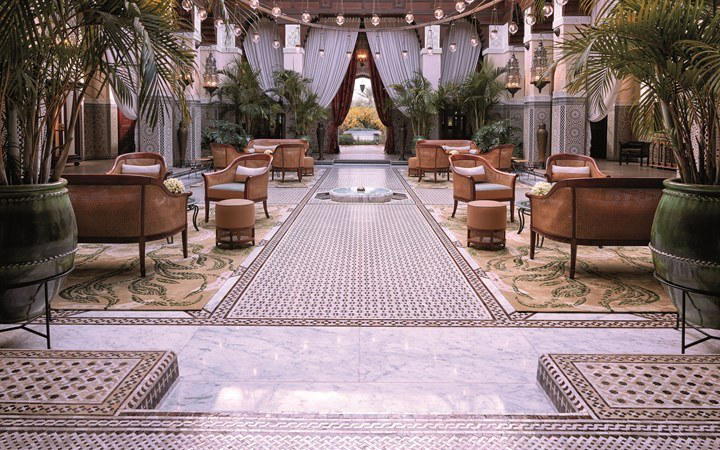
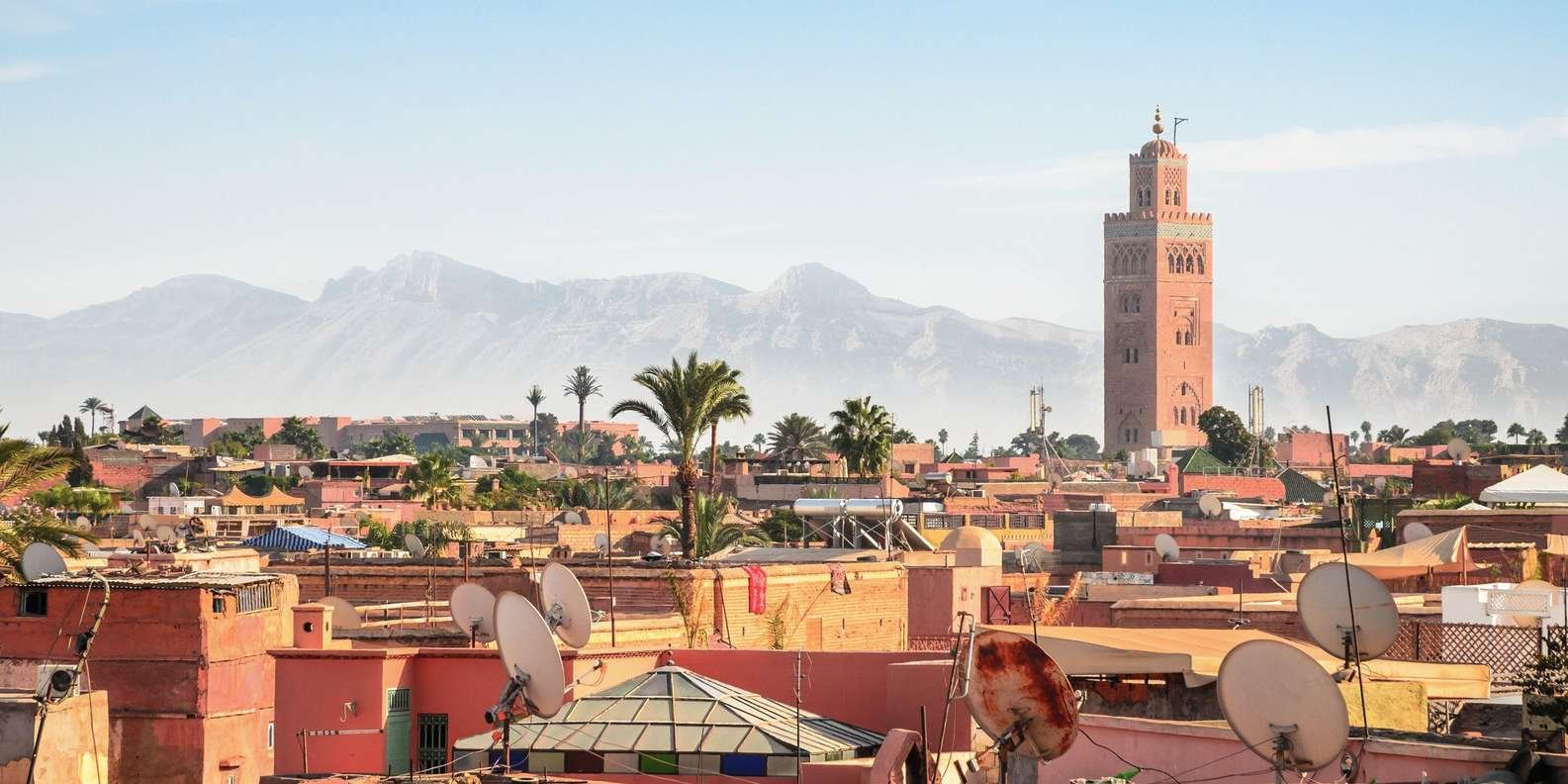
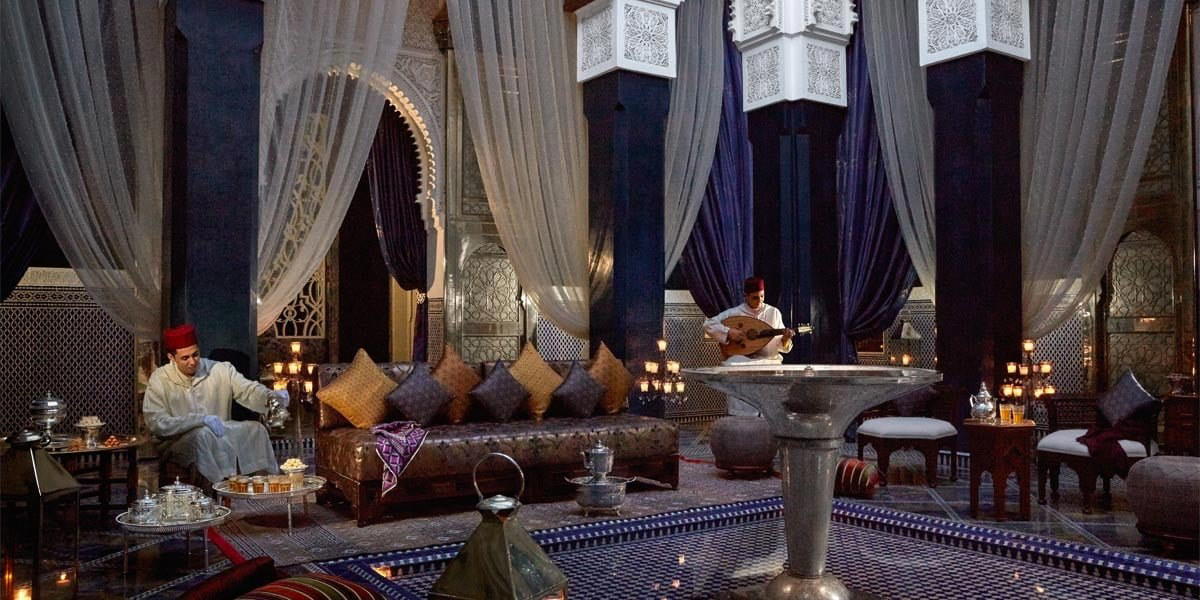
Approaching Royal Mansour means entering a walled private quarter rather than a conventional hotel lobby. Marrakech has many riads that trade on intimacy, and several grand hotels that trade on scale, but this address works by compressing both ideas into a controlled medina of alleys, courtyards, gardens and 53 private riads. The physical grammar is Moroccan: carved surfaces, shaded passages, patios open to the sky, roof terraces facing the city or the Atlas Mountains. The contemporary luxury signal is operational rather than decorative: 24-hour butler service, 24-hour valet and maid service, private pools on the roof terraces, and a culinary programme large enough to make dining a central reason to stay rather than an amenity attached to the room key.
The useful way to read Royal Mansour in Marrakech is through food and privacy. The city’s hotel scene splits between historic palace hotels, design-led riads, resort-style enclaves outside the centre and small medina houses that put the guest into domestic architecture. Royal Mansour belongs to a narrower category: the riad as ultra-luxury infrastructure. Its restaurants and bars are not side rooms off a reception desk; they form part of a broader argument about how Moroccan hospitality can be staged at international hotel level without abandoning local craft codes. Current awards support that positioning: La Liste Leading Hotels 2026 gives it 98.5 points, World Travel Awards named it Africa’s Leading Luxury Hotel and Africa’s Leading Luxury Hotel Villa in 2025, and World's 50 Best Hotels ranked it #13 in 2025, after #38 in 2024 and #23 in 2023.
The dining programme as the hotel's real centre of gravity
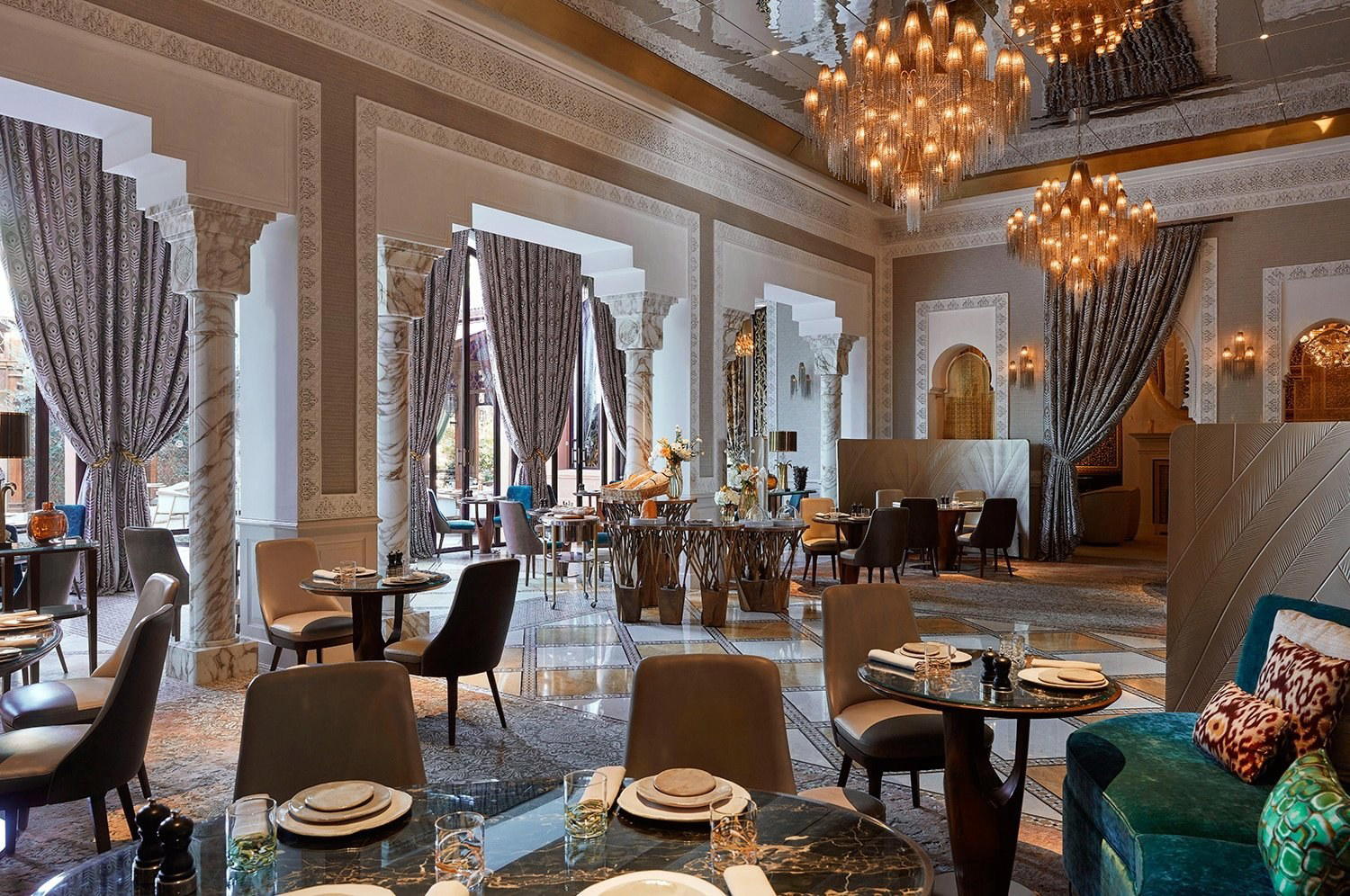
Marrakech hotel dining has changed. The old model treated the property restaurant as a fallback for tired arrivals or late departures. The stronger addresses now use restaurants to compete with the city’s independent dining rooms, courtyard tables and rooftop terraces. Royal Mansour is built for that shift. Its four principal restaurant identities cover Moroccan, French brasserie, garden-led international cooking and contemporary Italian, creating a circuit of dining rooms rather than a single house restaurant stretched across breakfast, lunch and dinner.
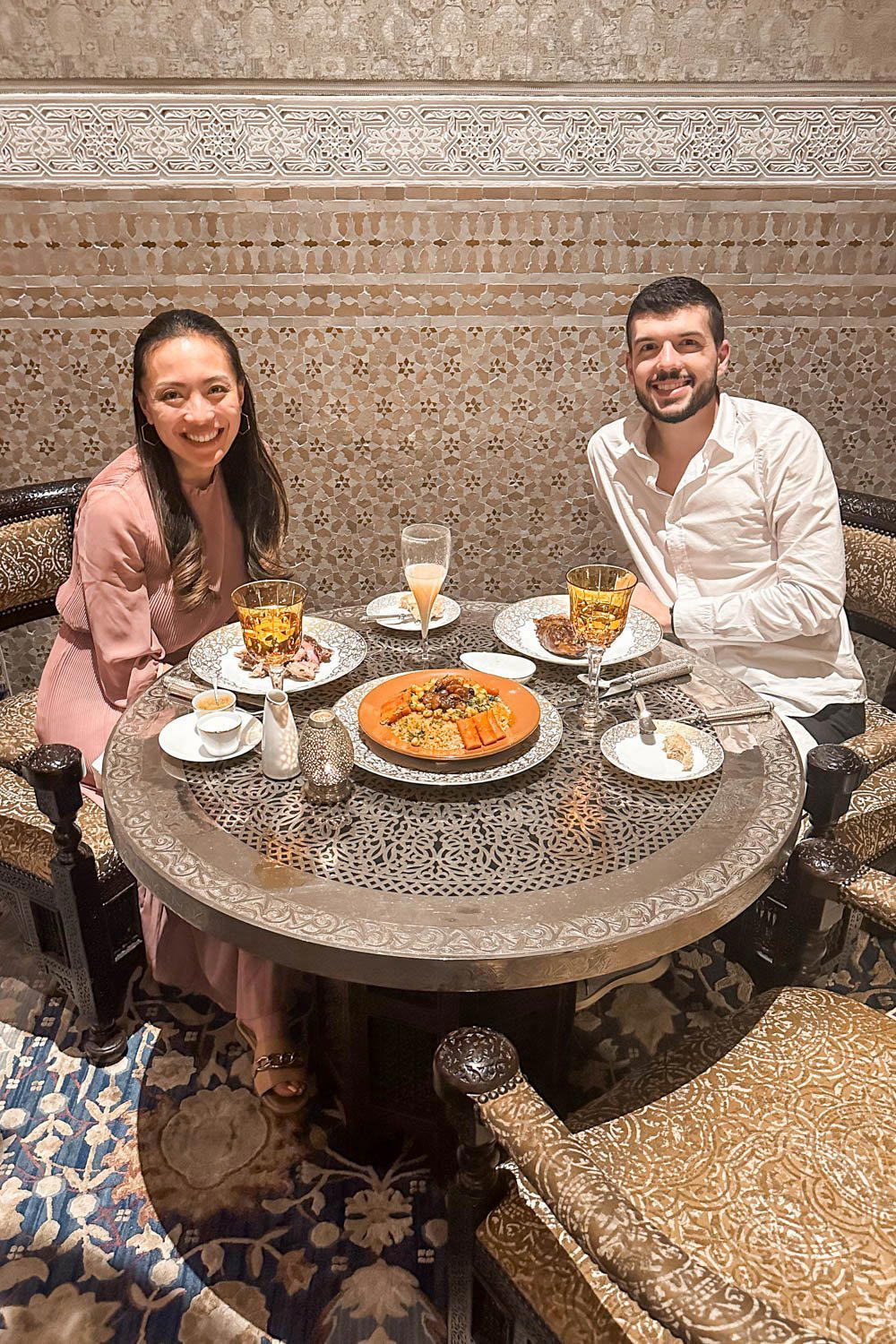
La Grande Table Marocaine carries the heaviest cultural load because Moroccan gastronomy is the obvious test in Marrakech. The format is described by the hotel data as revisited classics from Moroccan gastronomy, a phrase that matters in a city where tradition can be either preserved with discipline or softened into tourist shorthand. Within a luxury hotel, the question is not whether tagines, pastilla, couscous or regional spicing appear in some expected form; the question is whether the dining room treats Moroccan food as a serious culinary language with ceremony, pacing and technical polish. Royal Mansour’s award record does not certify a single plate, but it does place the property inside a peer group where dining quality affects hotel reputation, not merely guest convenience.
La Grande Brasserie sits in a different lineage. French brasserie culture has deep historical resonance in Morocco, yet the modern hotel brasserie must avoid becoming a colonial costume. The stated approach here is French brasserie classics with a modern twist, which places the restaurant in the category of international hotel dining that offers familiarity without collapsing into generic luxury. In practice, the editorial point is comparative: Marrakech travellers choosing between palace hotels and riads often want at least one evening that is polished, social and easy to read after a day in the medina. A brasserie format answers that need better than a tasting-menu posture.
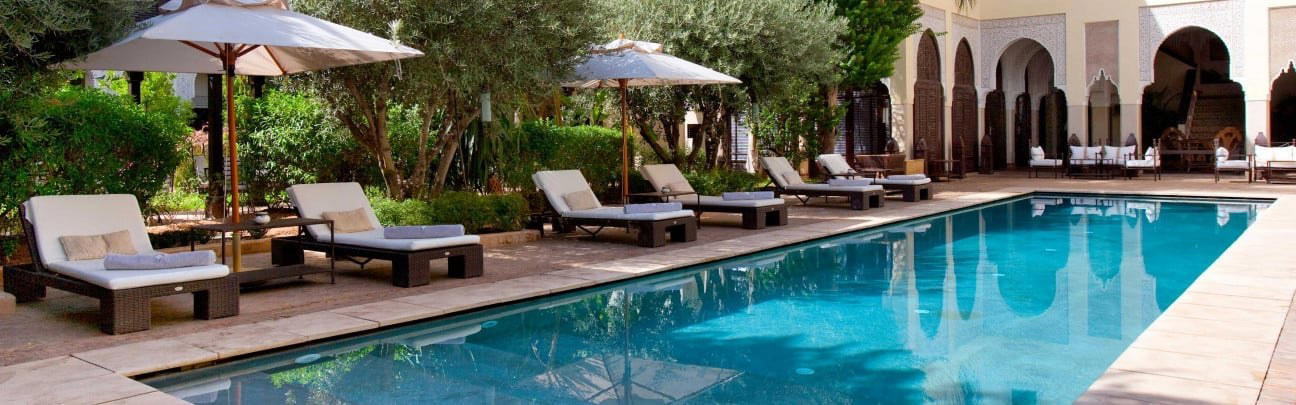
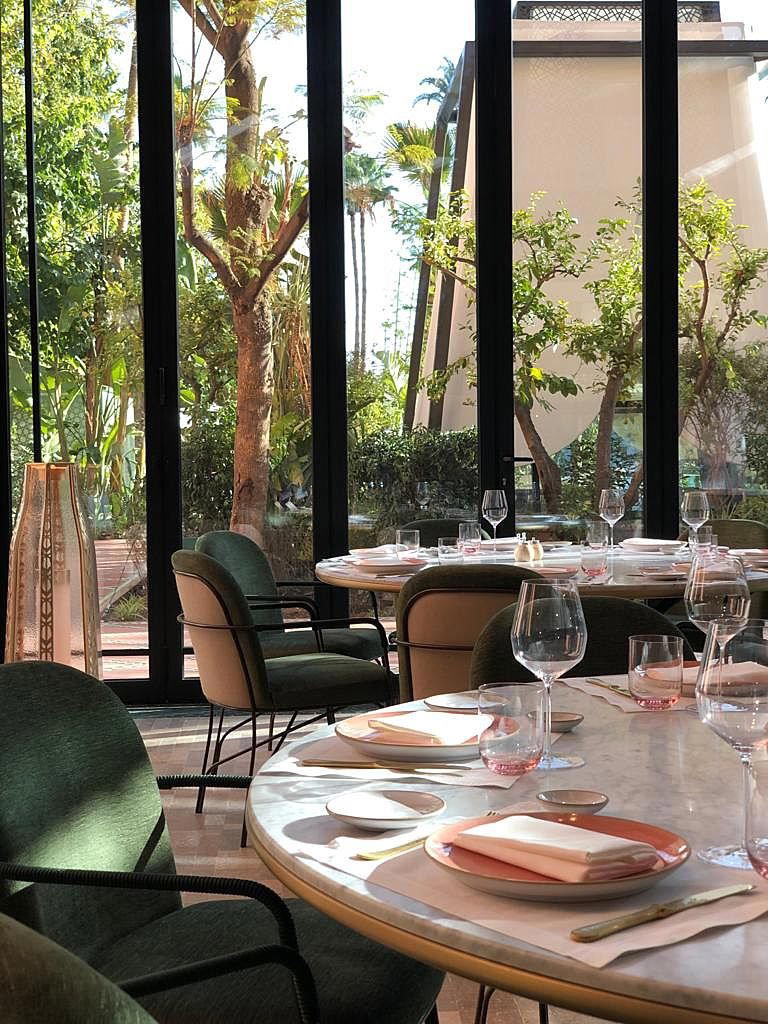
Le Jardin extends the property outward. Its kitchen is described as drawing from Japan, Thailand, Peru and the Mediterranean, which signals the global resort vocabulary now common in warm-climate luxury hotels. What makes the format relevant here is the setting: a 2.8-hectare garden and a 600-square-metre swimming pool framed by seven private pavilions. In Marrakech, gardens are not decorative filler. They are part of the city’s historic language of water, shade and enclosure. A garden restaurant inside a walled hotel therefore reads differently from a poolside venue in a beach resort; it becomes a controlled counterpoint to the density of the medina and the heat of the streets.
Sesamo completes the range with contemporary Italian cooking. Italian restaurants in luxury hotels often function as the safe table for multi-night stays, but in a property with 53 riads rather than hundreds of rooms, the inclusion reads as strategic breadth rather than mass-market coverage. The guest can stay inside the compound for several nights without repeating the same culinary register, or use the restaurants as pauses between Marrakech dining beyond the walls. For the wider city context, see Our full Marrakech restaurants guide, which places hotel dining alongside independent rooms and medina addresses.
Bars, private dining and the Marrakech rhythm
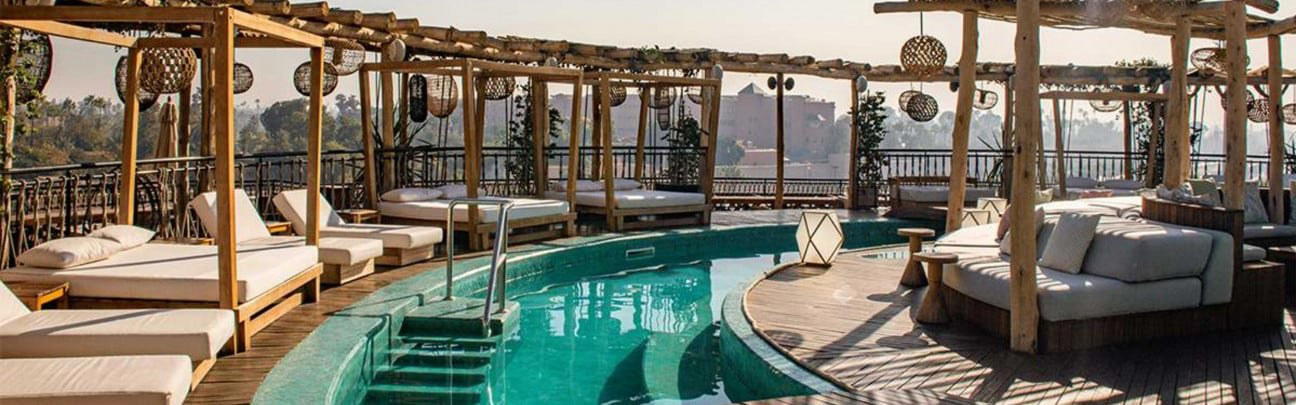
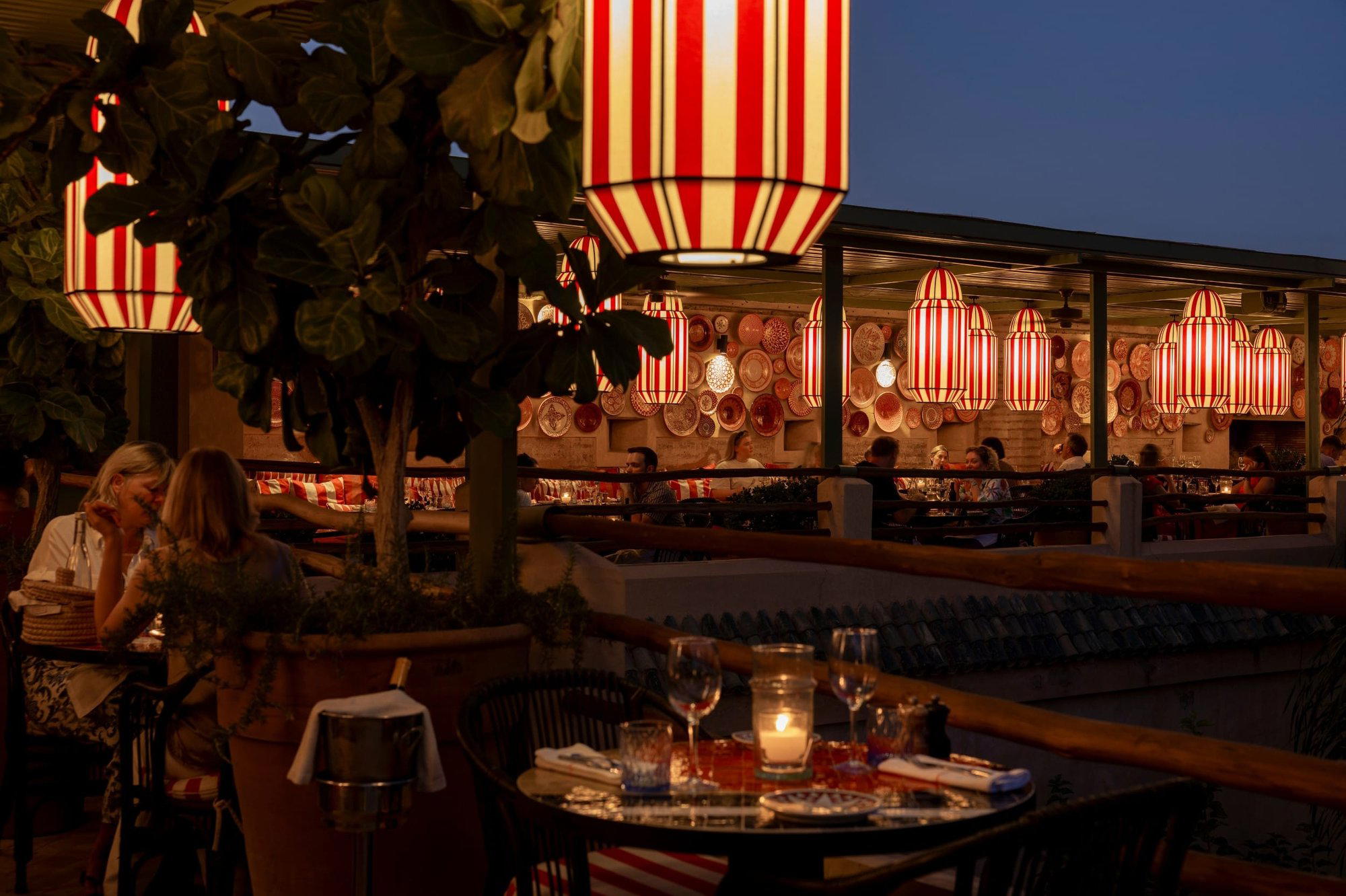
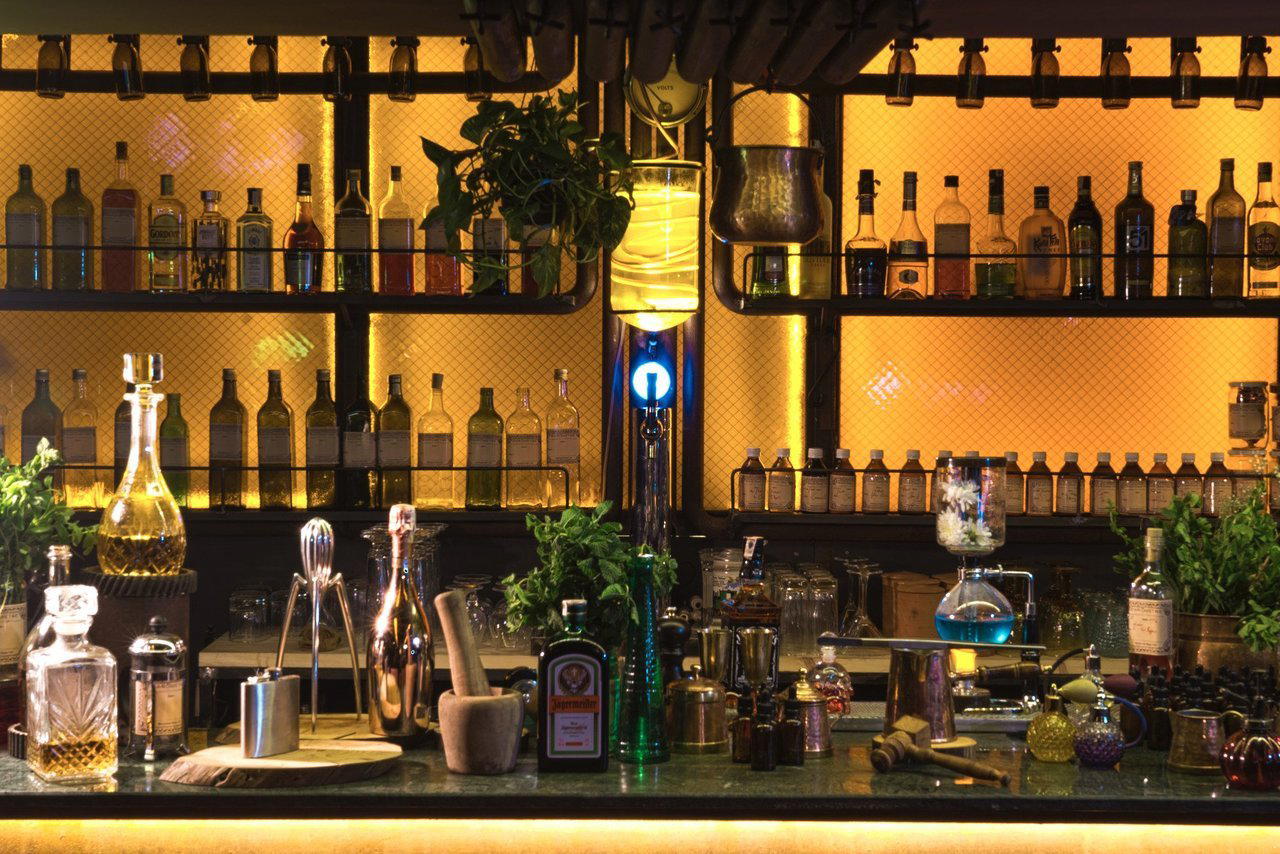
The bar programme follows the same pattern of controlled privacy. The Lobby Bar & Lounge, a Cigar & Liquor Bar with old spirits and well-known cigars, and the option to dine inside the riad or on the roof terrace all respond to a specific Marrakech problem: after dark, the city can be thrilling outside and deeply appealing inside. A rooftop dinner beside a private pool or a nightcap by a terrace fireplace is not an invented fantasy here; the riad data states that all roof terraces have their own pool, sun beds and fireplaces, with larger riads adding outside dining and separate bathrooms. That makes in-riad dining part of the property’s structure, not a room-service compromise.
This is also where Royal Mansour separates itself from smaller riads. A medina house can provide intimacy, but it rarely matches the breadth of restaurants, bars, spa, gardens, pool infrastructure and full-time service. Larger city hotels can provide the infrastructure, but they rarely reproduce the spatial privacy of an individual riad. The comparison matters for trip planning. Travellers considering La Mamounia are often weighing heritage palace atmosphere and garden grandeur; those looking at Amanjena are considering resort calm outside the densest urban rhythm. Royal Mansour sits between those poles: more private than a traditional palace hotel, more city-embedded than a destination resort.
Riad architecture at hotel scale
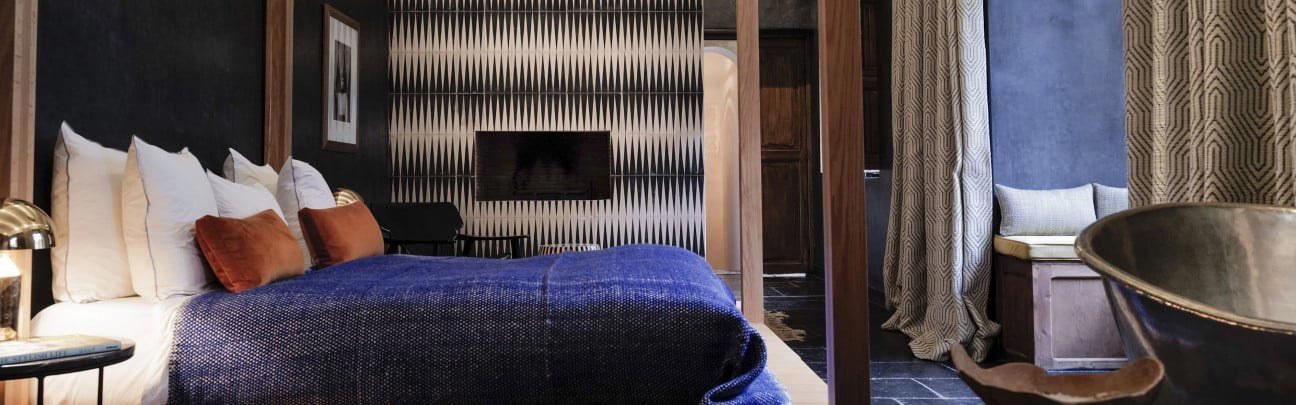
The 53 riads are the defining unit. Most have one bedroom, with two- and three-bedroom riads also available, and the Grand Riad has four bedrooms. Ground floors include an outdoor patio, living room, bar and lobby; larger riads add galleries and dining rooms with bars. The hotel record describes the property as 6.2 hectares, fully enclosed by its own wall, with one side formed by the existing city wall. That scale allows the architecture to behave like a district: buildings, squares, gardens and winding shaded alleyways create movement between private and public spaces without pushing guests through hotel corridors.
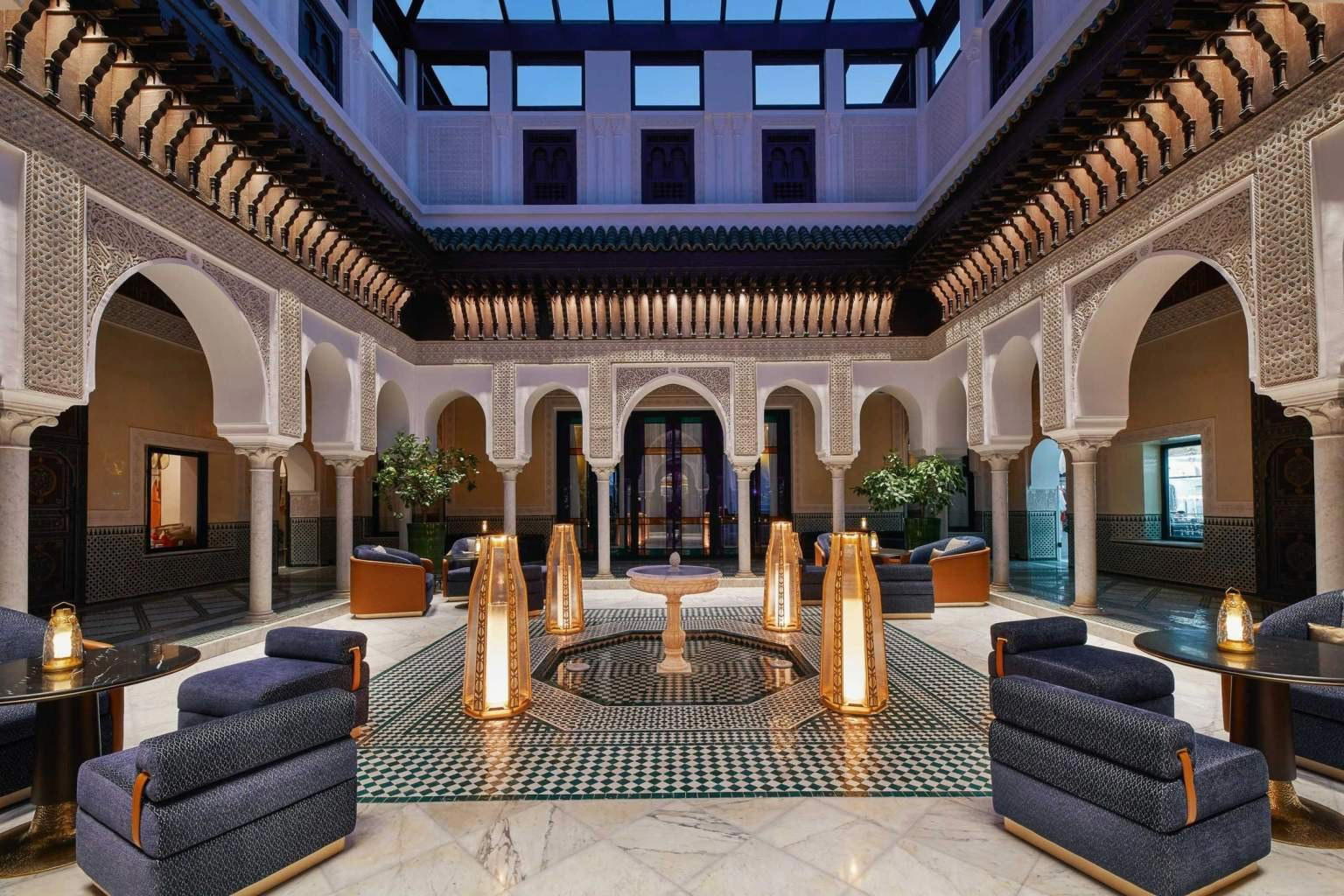
Royal Mansour was commissioned by the King of Morocco to capture the country’s architecture and visual culture, and the property record notes that 80 percent of the hotel was crafted by hand. Another public inspection note in the record cites more than 1,200 artisans over three years. Those details matter because Moroccan luxury is often judged by craft claims: zellige, carved plaster, woodwork, metalwork, textiles and proportion. Here, craft is not a decorative insert brought into an otherwise international shell; it is the basis of the hotel’s spatial identity. That is why the property’s membership in Leading Hotels of the World in 2025 functions as a hospitality trust signal, while the construction story functions as cultural evidence.
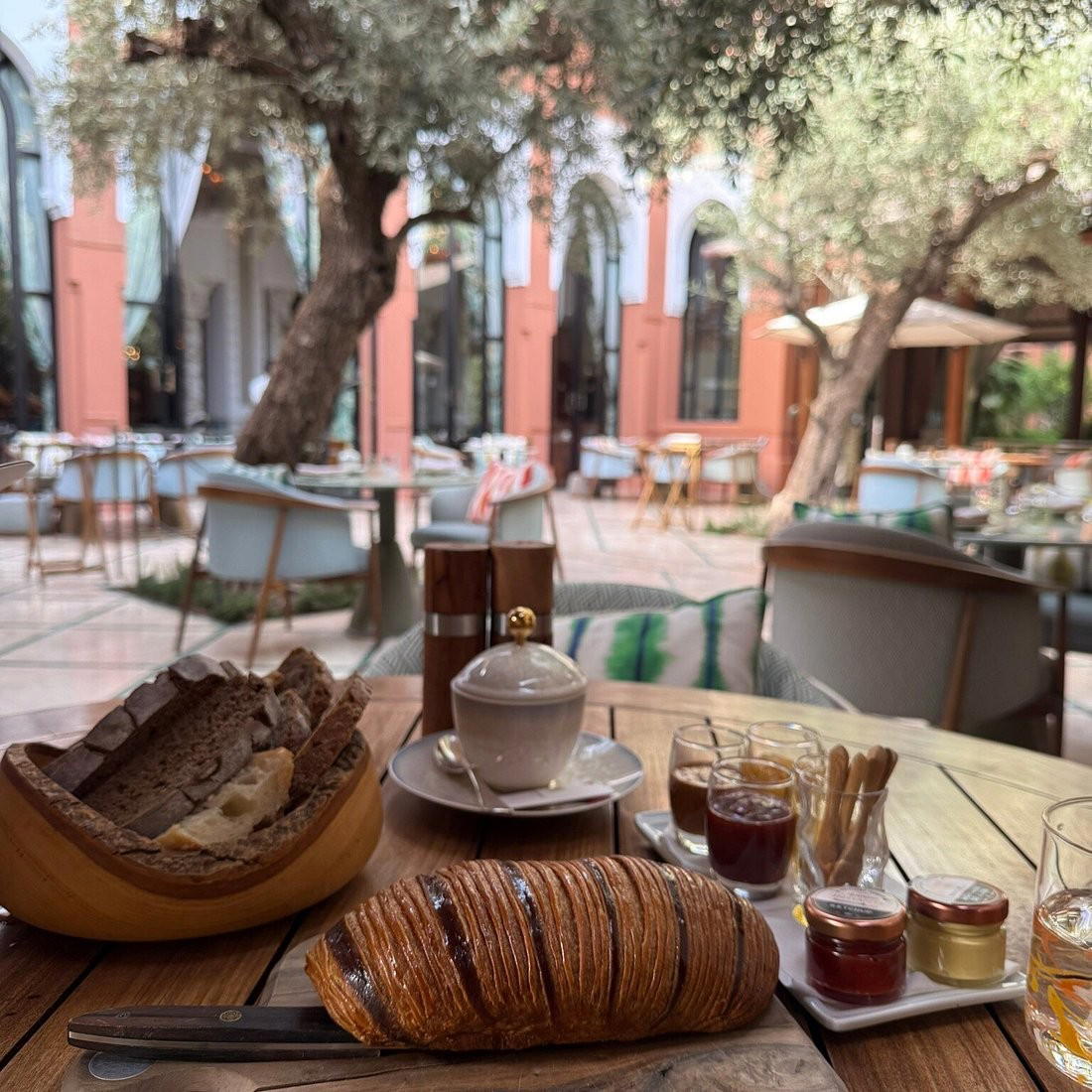
For travellers comparing riad categories, the distinction is financial and architectural. Small medina addresses such as AnaYela, Dar Assiya, Dar Darma and Dar Housnia offer the intimacy of domestic-scale Marrakech. BELDI COUNTRY CLUB and Caravan by Habitas Agafay shift the equation toward country-club ease or desert-fringe experience. Royal Mansour uses the riad as the suite category itself, which changes the daily rhythm: breakfast can happen in a private courtyard, work can happen in a living room rather than on a bed, and evening can move to the roof without crossing a lobby.
Spa, gardens and the architecture of retreat
The spa is part of the property’s reputation, with numerous international prizes noted in the database and a 27,000-square-foot facility recorded in inspection highlights. Its visual signature is a white mashrabiya-like atrium, with an indoor pool beneath a glass roof and a fountain set with fresh roses. The facilities listed include two hammams, a Watsu bath area, salon and tea lounge. In Marrakech, hammam culture has everyday roots as well as luxury expression, and the hotel version inevitably translates that tradition into a more private, controlled register. The credibility here comes from scale and design rather than claims of authenticity alone.
Le Jardin’s 2.8 hectares and 600-square-metre swimming pool also matter for timing. Marrakech heat changes the value of a hotel between late morning and mid-afternoon; a property with shaded gardens, private pavilions, lap pool, kids’ pool and in-riad terraces gives guests more ways to manage the day without leaving the compound. The record also notes a kids’ club, library, art gallery, car rental with or without driver, airport transfer, laundry and dry cleaning, baby sitting and complimentary Wi-Fi in all riads and public areas. These details sound practical, but in a city where guests often split time between medina walks, garden visits, restaurants and day trips, service depth changes how much energy the city takes from a stay.
How Royal Mansour fits the Marrakech hotel conversation
Marrakech luxury is not a single category. It includes historic grand hotels, riads inside dense neighbourhoods, new-design properties, Palmeraie-style resort compounds and desert-adjacent camps. Royal Mansour’s competitive set is narrower: hotels that can claim both destination dining and architectural authorship. The property’s current recognition gives that claim weight. World's 50 Best Hotels placed it #13 in 2025; La Liste Leading Hotels 2026 scored it 98.5 points; World Travel Awards in 2025 named Royal Mansour Marrakech Africa's Leading Luxury Hotel and Morocco's Leading Boutique Hotel, while the Grand Riad was named Africa's Leading Luxury Hotel Villa and Morocco's Leading Luxury Hotel Villa.
The Google review signal, 4.6 from 2,169 reviews, is less rarefied but useful because it shows a large public-review base rather than a tiny sample of luxury commentary. Awards and crowd data measure different things. Awards place a hotel inside an international peer set. Review volume shows sustained exposure to regular guest judgment. For a high-price property where the database currently lists “Price: No rooms available,” that combination is more useful than a vague claim about exclusivity.
Readers building a Morocco route can use Royal Mansour as the Marrakech anchor and then compare other city moods through Our full Marrakech hotels guide. Beyond the city, the country’s hotel map changes quickly: coastal calm at Rebali Riads in Sidi Kaouki, capital-city polish at STORY Rabat Hotel in Rabat, Atlantic business-and-beach positioning at Four Seasons Hotel Casablanca in Casablanca, old-city heritage at Riad Fès in Fès, northern coast atmosphere at Villa Mabrouka in Al Hoceima, Atlantic medina ease at Madada Mogador in Essaouira, thalasso resort structure at Sofitel Agadir Thalassa Sea & Spa in Agadir, coastal resort formality at The St. Regis La Bahia Blanca Resort, Tamuda Bay in Tamuda Bay and garden-led southern Morocco at Dar al Hossoun in Taroudant.
Internationally, the property also belongs in a conversation with high-craft city hotels where design, dining and service are the point rather than extras. The comparison is not literal, but useful: The Fifth Avenue Hotel in New York City uses decorative intensity in a dense urban setting; Cheval Blanc Paris in Paris ties fashion-house polish to Seine-side hospitality; Hotel Sacher Wien in Vienna carries a historic European hotel tradition. Royal Mansour’s point of difference is the riad-as-suite model and the way food, gardens and private terraces are built into the stay.
Planning a stay around meals, not only rooms
Royal Mansour is on Rue Abou Abbas El Sebti, Marrakech 40000. The database does not provide a public phone number, website, room rate, booking method, dress code or hours, so planning should start with availability through the traveller’s preferred hotel booking channel or advisor rather than assuming walk-in access to every restaurant or bar. The property offers airport transfer and car rental with or without driver, which matters in Marrakech because the easiest version of the city often uses a driver for gardens, museums and dinners beyond walking range, then returns to a hotel built for recovery.
The strongest use of the hotel is a multi-night stay that treats dining as part of the itinerary. One evening can be Moroccan at La Grande Table Marocaine, another can be French brasserie or Italian, and a slower day can move through Le Jardin, the pool and the spa. Travellers focused on the city’s independent rooms should also consult Our full Marrakech restaurants guide; those building late-night plans can cross-reference Our full Marrakech bars guide. For broader trip design, Our full Marrakech experiences guide is more relevant than a hotel-only plan, while Our full Marrakech wineries guide is useful for readers mapping Morocco through wine, dining and regional travel rather than accommodation alone.
Nearby-ish Comparables
A quick peer check to anchor this venue’s price and recognition.
| Venue | Cuisine | Price | Notes |
|---|---|---|---|
| Royal Mansour | This venue | ||
| Amanjena | |||
| Fairmont Royal Palm Marrakech | |||
| Four Seasons Resort Marrakech | |||
| Mandarin Oriental, Marrakech | |||
| La Mamounia |
At a Glance
- Opulent
- Romantic
- Elegant
- Scenic
- Sophisticated
- Honeymoon
- Romantic Getaway
- Anniversary
- Celebration
- Family Vacation
- Destination Wedding
- Private Villa
- Butler Service
- Destination Spa
- Garden
- Terrace
- Panoramic View
- Private Dining
- Rooftop Pool
- Wifi
- Pool
- Spa
- Fitness Center
- Room Service
- Concierge
- Valet Parking
- Kids Club
- Golf Course
- Restaurant
- Bar
- Business Center
- Garden
- Mountain
Serene and palatial with ornate Moroccan decor, intricate tilework, handcrafted furnishings, and lush gardens creating a tranquil oasis that evokes royalty and timeless elegance.