








<strong>Aman Tokyo</strong> places resort-scale calm inside Otemachi’s corporate core, using <strong>Kerry Hill</strong>’s Japanese residential language, 84 rooms, and high-floor views to redraw the idea of a city hotel. Its credentials are unusually current: <strong>World’s 50</strong> <strong>Best Hotels</strong> #25 in 2025, <strong>Michelin 2</strong> Keys in 2024, Tatler Asia’s 2025 Best City Hotel badge, La Liste Top Hotels 2026 at 93.5 points, and Pearl Recommended Hotel status.
 Discover on Pearl
Pearl is the En Primeur Club membership app — saves, bookings, and concierge access live there. Same editors, same standards.
Arrival in Otemachi is all glass, stone, office towers, and controlled movement; then the hotel shifts the register upward. Aman Tokyo occupies the upper six floors of the Otemachi Tower, and its lobby turns the city-hotel formula inside out: a vast Japanese-residential volume by Kerry Hill, a meditation garden, backlit shoji paper overhead, and long windows pulling Tokyo into the room rather than treating it as background scenery. In a city where luxury hotels often compete through service density and skyline drama, this one makes scale feel hushed.
That architectural move explains why the property matters in Tokyo’s hotel conversation. The capital’s luxury tier has become crowded with polished international addresses, from Marunouchi business hotels to fashion-house flagships and wellness-led newcomers. Aman Tokyo belongs to the smaller group that treats design as the primary argument. Its 84 rooms and suites, position above Otemachi, and resort brand lineage place it in a different bracket from larger city hotels, closer to an urban ryokan interpretation than a conventional tower property.
Otemachi luxury, seen from above
Tokyo’s east-side luxury corridor has a particular rhythm. Otemachi, Marunouchi, and the Imperial Palace edge form a district of finance, rail access, government-adjacent calm, and old-city geography. Hotels here do not sell nightlife first; they sell composure, connections, and proximity to Tokyo Station. Aman Tokyo uses that setting with unusual force. The address, The Otemachi Tower, 1-chōme-5-6 Ōtemachi, Chiyoda City, puts the property in the business district rather than a leisure enclave, which makes the high-floor retreat feel more pointed.
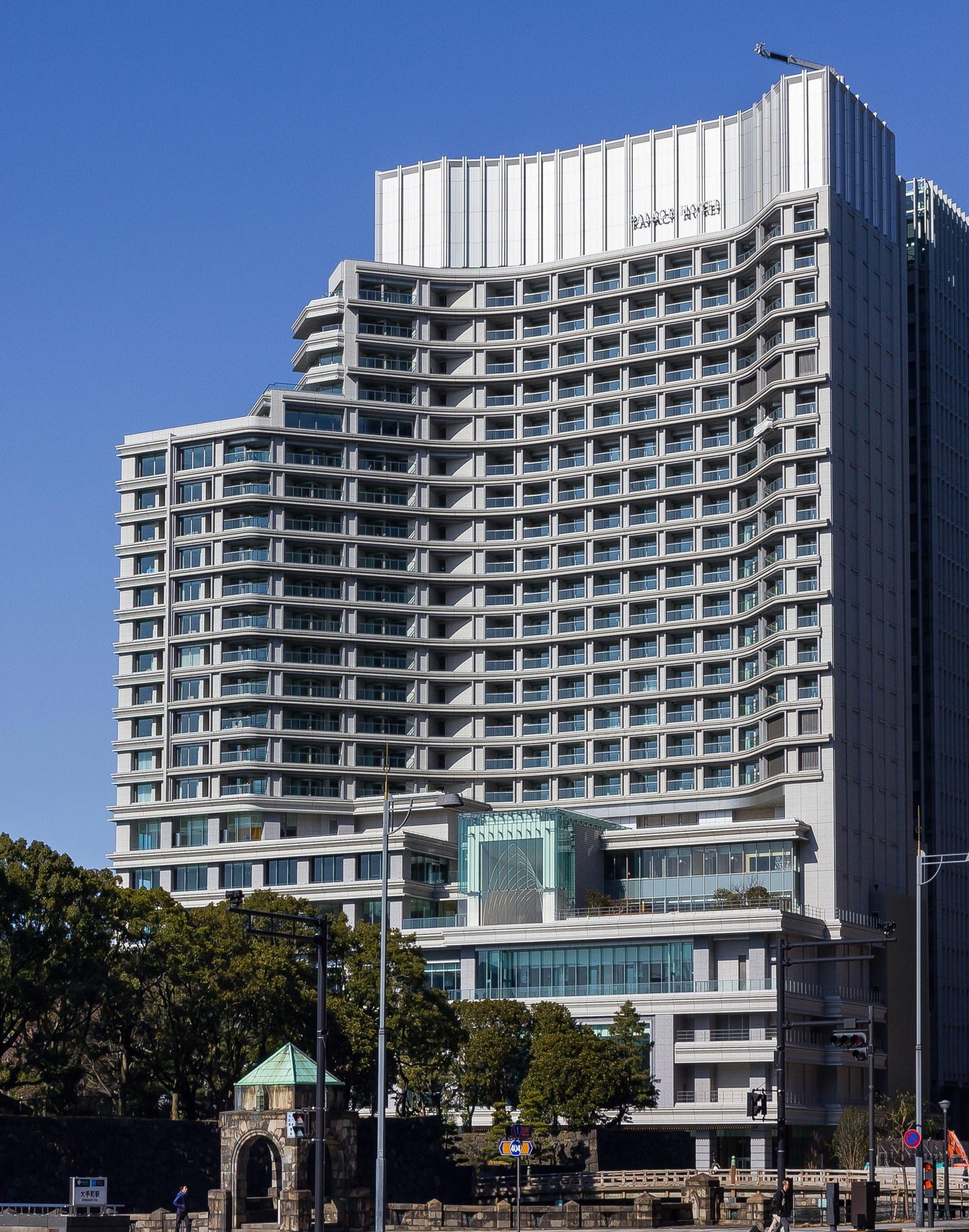
The peer set nearby is dense. Four Seasons Hotel Tokyo at Otemachi also works the palace-side, high-rise model; Palace Hotel Tokyo has the moat-side relationship with the Imperial Palace; Four Seasons Hotel Tokyo at Marunouchi is more rail-adjacent and compact. Aman Tokyo is quieter in attitude than that cluster, less about urban polish than about spatial withdrawal. For the broader city edit, Our full Tokyo hotels guide maps how these properties divide by neighbourhood, view, and traveller purpose.
Kerry Hill's Japanese house in the sky
The design is the central text here. Kerry Hill’s interior borrows the proportions and symbolism of a traditional Japanese home without turning the hotel into a museum set. The lobby arrangement, meditation garden, shoji-inspired ceiling treatment, basalt stone, cypress wood, washi paper, and restrained material palette give the property its authority. The important point is not that the hotel uses Japanese references; many Tokyo hotels do. The difference is that the references control the scale of the building. A skyscraper volume is made to feel domestic, ordered, and ritualised.
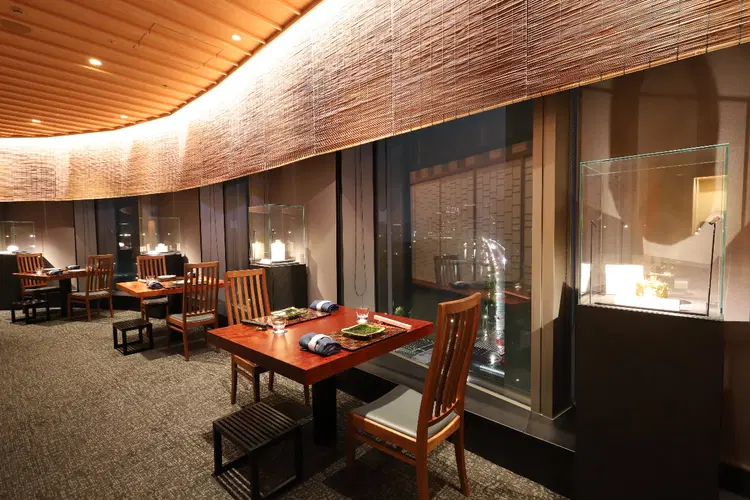
That restraint sits against Tokyo’s appetite for spectacle. At one end of the market, design hotels use art, retail, and nightlife as social theatre. At the other, classic grand hotels use ceremony and old-guard hospitality codes. Aman Tokyo chooses architectural subtraction: fewer visual interruptions, larger volumes, natural materials, and long sightlines. The result is not minimalist in the cold international sense; it is a metropolitan reading of ryokan calm, with sliding-screen cues and timber warmth translated for a tower above Chiyoda.
Comparisons help clarify the point. Bvlgari Hotel Tokyo brings a fashion-house lens to the city’s upper luxury tier, while JANU Tokyo represents a more social, contemporary wellness-hospitality direction from the same broader Aman orbit. Andaz Tokyo reads more lifestyle-driven, and Bellustar Tokyo, A Pan Pacific Hotel carries the vertical glamour of Shinjuku. Aman Tokyo is less extroverted. Its design asks whether a city hotel can behave like a refuge without denying the city outside the glass.
Rooms as urban ryokan logic
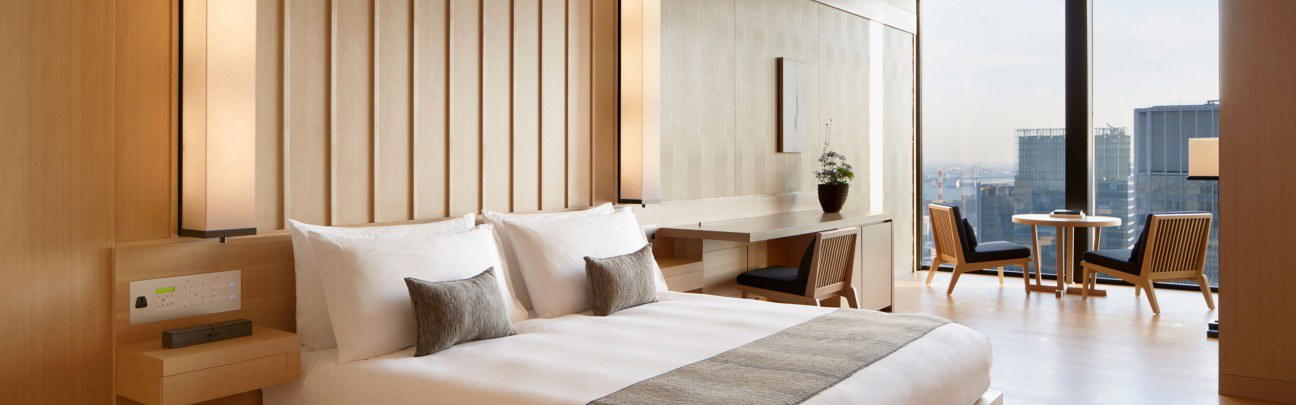
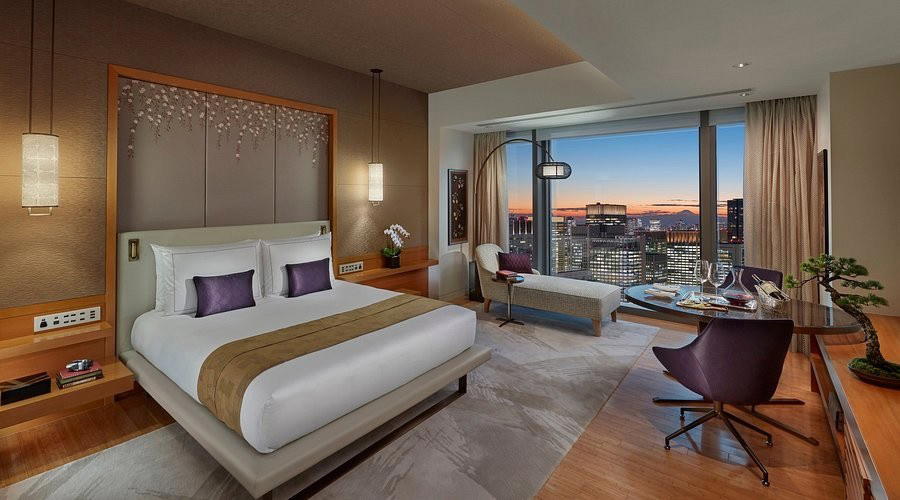
The 84 rooms and suites are arranged around Japanese residential ideas: space, separation, texture, and view. The database notes cypress paneling, chestnut wood flooring, local artwork, traditional ceramics, paper lanterns, granite baths with heated stone flooring, sliding shoji screen doors, remote-control blackout shades, and contemporary entertainment systems. These details matter because they show how the hotel balances cultural reference with urban comfort rather than merely dressing a standard room in decorative motifs.
Rooms with views toward the Imperial Palace, Mount Fuji, or Tokyo Skytree turn orientation into part of the experience. Tokyo’s luxury hotels often trade on panorama, but the framing here is more controlled: the city is seen from a room that has been softened by stone, wood, and paper. At a reported price marker of $2,953, the property sits in the rarefied band where room count, view quality, design authorship, and recognition all have to justify the rate. The argument is strongest for travellers who value spatial calm over lobby theatre.
Spa scale and the resort question
Aman’s wider reputation was built in resort settings, so the Tokyo project had to answer a specific question: can resort-style withdrawal work inside a business district? The spa provides much of the answer. Set on the 33rd and 34th floors, it is described in the venue record as the biggest in Tokyo, with a gym, yoga studio, onsen-style hot baths, and a black basalt swimming pool. The scale is not incidental; it gives the property a resort spine inside a vertical city format.
Tokyo has many hotels with polished wellness facilities, but fewer make wellness a structural identity rather than an amenity floor. Here, the spa and public spaces support the same architectural argument as the rooms: stone, water, quiet, and controlled light above an intensely functional district. The use of Aman Skincare products, noted in the record, reinforces the brand’s house language, while onsen-inspired bathing connects the experience to Japanese bathing culture without claiming to replicate a countryside ryokan.
Travellers comparing city calm with regional ryokan traditions should also look beyond Tokyo. Gora Kadan in Hakone, Kamenoi Besso in Yufu, Zaborin in Kutchan, and Sekitei in Hatsukaichi-shi belong to a different tradition, where landscape, bathing, and meal structure do much of the work. Aman Tokyo translates selected elements of that grammar into the city, which is why the comparison is useful rather than literal.
Dining and drinking in context
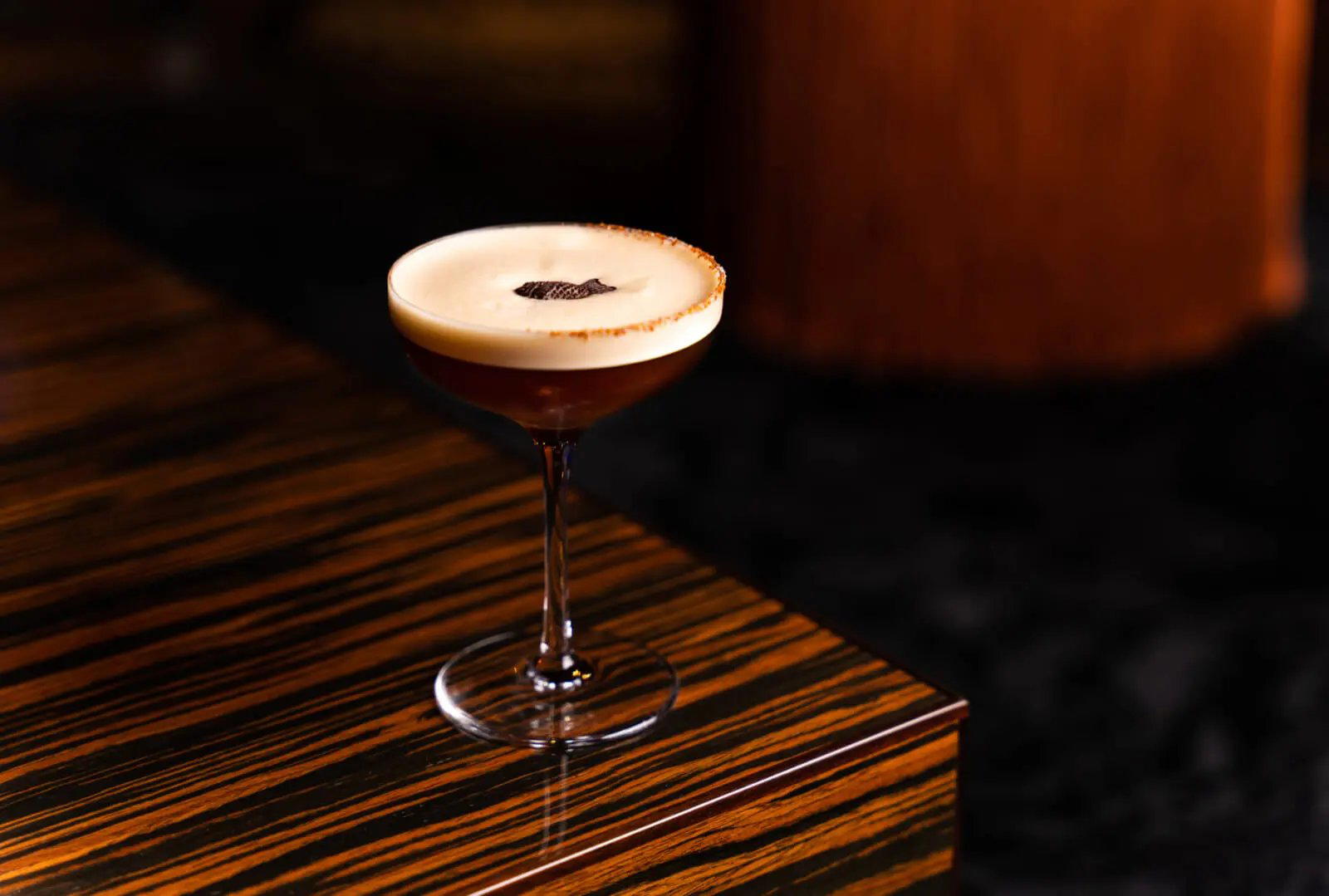
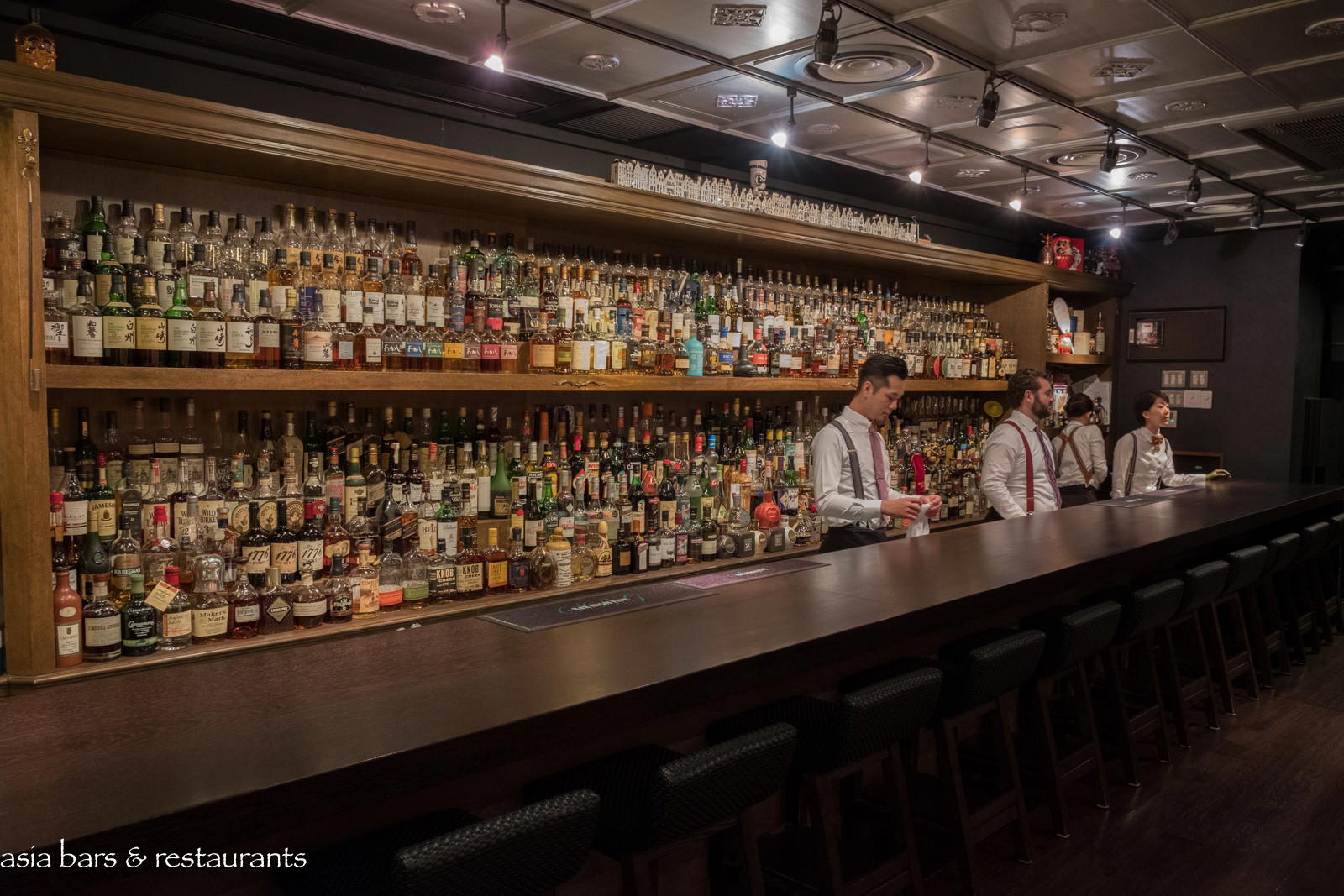
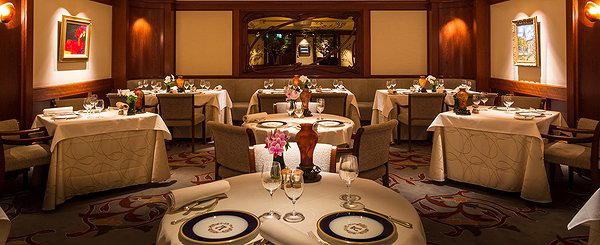
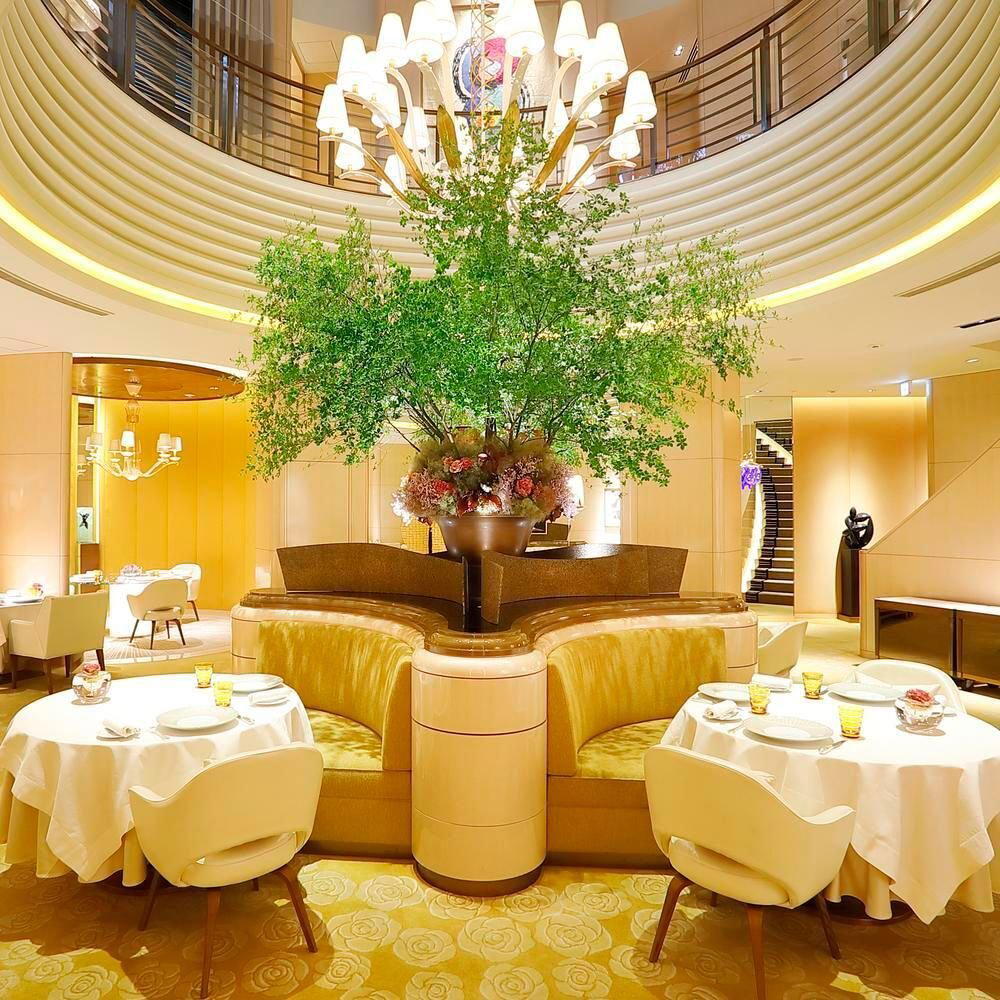
Tokyo does not give hotel dining an easy pass. The city’s restaurant culture is too deep, too specialised, and too competitive for a luxury address to rely on captive guests. Aman Tokyo’s dining record includes multiple venues, Japanese cuisine formats, a bar with sake and whisky selections, daily afternoon tea in the lounge on handmade bamboo stands, and Arva on the 33rd floor, described in the source material as a local interpretation of European fare using Japanese ingredients. Venetian-trained chef Masakazu Hiraki is associated with the Italian cooking, which gives the programme a credible bridge between European technique and Japanese sourcing.
The point is not that guests should stay inside the hotel for every meal. Tokyo rewards movement: sushi counters, tempura rooms, yakitori lanes, ramen shops, kaiseki houses, cocktail bars, and specialist coffee rooms all pull visitors into distinct neighbourhoods. Our full Tokyo restaurants guide and Our full Tokyo bars guide are better tools for plotting that wider circuit. The hotel’s food and drink offering matters most as a design continuation: lounge, bar, tea service, and high-floor dining extend the calm of the architecture rather than breaking it with theatrical excess.
The cigar lounge, Fumoir, adds another register after dark, with the record specifically noting port and Habanera as part of the experience. That kind of detail positions the hotel bar culture closer to controlled evening ritual than street-level Tokyo energy. For travellers interested in adjacent categories, Our full Tokyo experiences guide and Our full Tokyo wineries guide broaden the city beyond the hotel-dining frame.
Recognition and peer position
Awards record is unusually strong and recent. Aman Tokyo was ranked #5 in World’s 50 Best Hotels 2023, #7 in 2024, and #25 in 2025. Michelin awarded it 2 Keys in 2024. Tatler Asia included it in Tatler Leading Hotels Asia-Pacific 2025 with a Leading City Hotel badge, while La Liste Leading Hotels 2026 lists it at 93.5 points. It is also marked as a Pearl Recommended Hotel for 2025, and Google reviews show 4.4 from 1,847 reviews. Those signals put the property in a small global group where architecture, service, wellness, and destination relevance are assessed together.
Within Japan, the comparison shifts according to traveller intent. HOTEL THE MITSUI KYOTO in Kyoto brings heritage-city context into a contemporary luxury frame. Amanemu in Mie belongs to Aman’s resort vocabulary rather than Tokyo’s urban one. The Ritz-Carlton, Nikko in Nikko and Halekulani Okinawa in Okinawa answer different questions about nature, leisure, and regional access. Benesse House in Naoshima is inseparable from art-island culture. Aman Tokyo’s distinction is that it compresses resort quiet, Japanese residential design, and global hotel recognition into the centre of the capital.
Internationally, it also sits in a design-led city-hotel conversation with properties such as The Fifth Avenue Hotel in New York City, Cheval Blanc Paris in Paris, and Hotel Sacher Wien in Vienna. Each uses local identity differently: New York through layered residential eccentricity, Paris through luxury-retail precision, Vienna through historic grand-hotel continuity. Tokyo’s contribution here is disciplined vertical serenity.
Planning intelligence
The practical case is clear. The hotel is in Otemachi, connected to the five-line Otemachi subway station and close to Tokyo Station, giving access to the nationwide bullet-train network. Haneda Airport is listed as a 40-minute drive, while Narita Airport is listed as a 60-minute drive. That makes the property especially useful for travellers combining Tokyo with Kyoto, Hakone, Nikko, or another rail-linked itinerary. The business-district location is calmer at night than Shinjuku or Shibuya, so guests seeking late street energy should plan to travel across town; those prioritising palace-side walks, rail logistics, and quiet returns will understand the address immediately.
The room count also shapes planning. With 84 rooms and suites, Aman Tokyo is not a large convention hotel, and its current recognition keeps it in high demand among luxury travellers comparing Tokyo’s small upper tier. The price marker of $2,953 signals that this is a deliberate splurge rather than a casual stopover. The strongest use case is a first or final Tokyo stay on a Japan itinerary, when the combination of rail access, spa scale, and architectural calm carries practical value as well as aesthetic weight.
What should you expect atmosphere-wise at Aman Tokyo?
Expect Tokyo to be present but controlled: Otemachi’s corporate rhythm below, long city views through large windows, and interiors shaped by shoji paper, basalt stone, cypress wood, and Japanese residential proportions. The atmosphere is quieter than many luxury hotels in the city, with awards such as Michelin 2 Keys in 2024 and World’s 50 Best Hotels #25 in 2025 confirming its place in the high-recognition tier. At the $2,953 price marker, the value lies in space, silence, design authorship, and spa depth rather than social spectacle.
What is the standout thing about Aman Tokyo?
The standout is the architectural translation of a resort-like Aman mood into central Tokyo. Kerry Hill’s design, the 84-room scale, the upper-floor position in Otemachi Tower, and the 33rd- and 34th-floor spa create a hotel that feels withdrawn without being remote. In a city filled with technically strong luxury hotels, Aman Tokyo’s case rests on how completely its design, wellness facilities, views, and awards record align around one idea: calm above the capital.
Cuisine-First Comparison
A quick peer list to put this venue’s basics in context.
| Venue | Cuisine | Awards | Notes |
|---|---|---|---|
| Aman Tokyo | Michelin 2 Key | This venue | |
| Bvlgari Hotel Tokyo | Michelin 3 Key | ||
| Four Seasons Hotel Tokyo at Otemachi | Michelin 3 Key | ||
| Palace Hotel Tokyo | Michelin 3 Key | ||
| Andaz Tokyo | Michelin 1 Key | ||
| Four Seasons Hotel Tokyo at Marunouchi | Michelin 1 Key |
Continue exploring
More in Tokyo
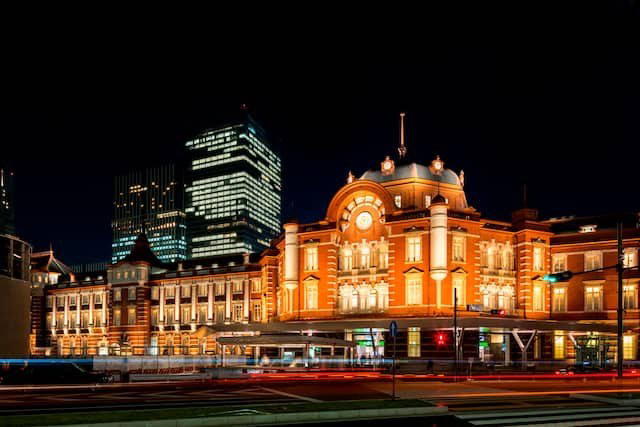
Hotels in Tokyo
Browse all →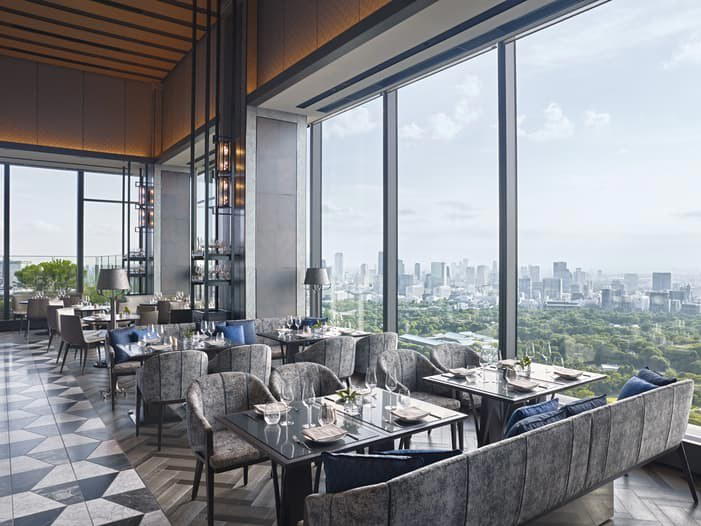
Bars in Tokyo
Browse all →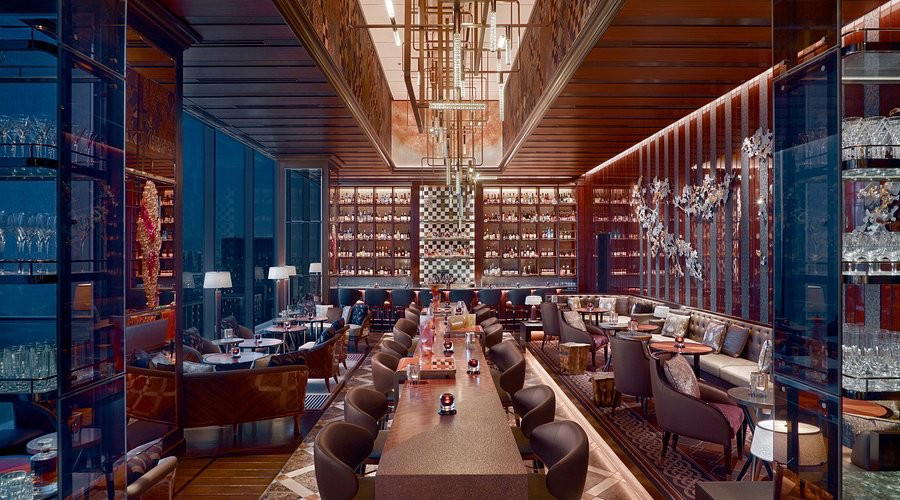
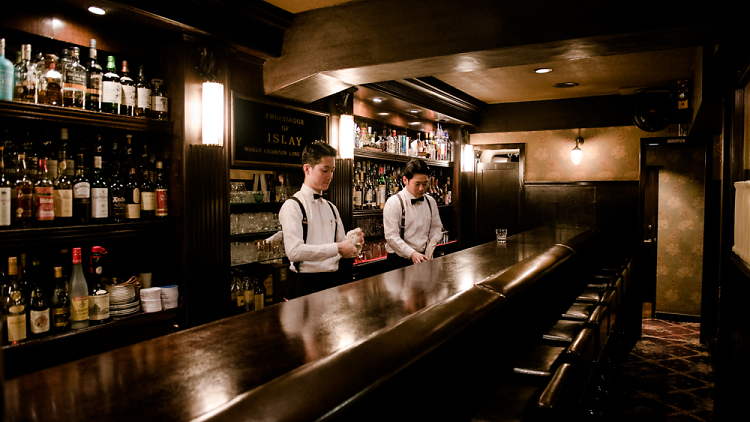

Restaurants in Tokyo
Browse all →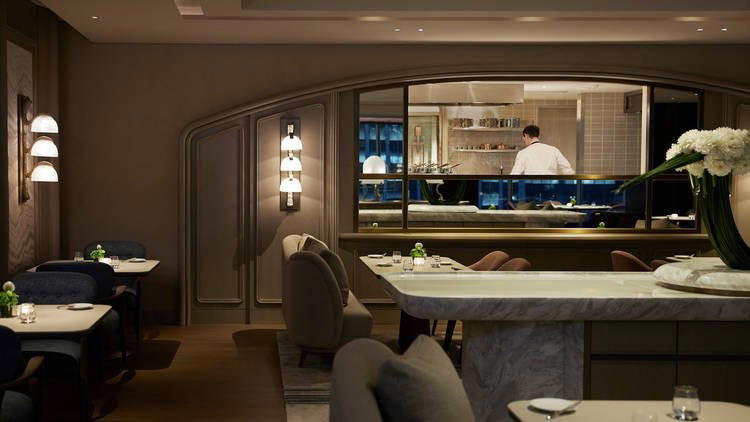
At a Glance
- Quiet
- Modern
- Elegant
- Sophisticated
- Minimalist
- Opulent
- Honeymoon
- Romantic Getaway
- Business Trip
- Wellness Retreat
- Anniversary
- Rooftop Pool
- Panoramic View
- Butler Service
- Pool
- Spa
- Fitness Center
- Room Service
- Concierge
- Wifi
- Restaurant
- Skyline
- Garden
- Mountain
Serene and minimalist modern Japanese design with muted slate tones, light-filled spacious areas, and a peaceful zen atmosphere tempered by urban serenity.