Google: 4.7 · 492 reviews
Atomix











Atomix holds three Michelin stars and ranked No. 1 in North America's 50 Best Restaurants 2025, making it the continent's most decorated Korean fine dining address. Chef Junghyun Park's 12-course tasting menu operates from a 14-seat basement counter in NoMad, Manhattan, where custom ceramics and course cards frame each dish within its Korean culinary context.
 Discover on Pearl
Pearl is the En Primeur Club membership app — saves, bookings, and concierge access live there. Same editors, same standards.
The building gives nothing away. A brownstone facade on East 30th Street, a neighbourhood that still reads more medical corridor than dining destination, and a ground-floor entrance that requires a moment of commitment before you realise you are exactly where you intended to be. That gap between expectation and arrival is, in retrospect, the first thing Atomix teaches you: Korean fine dining at this level operates on its own terms, not on the terms set by convention.
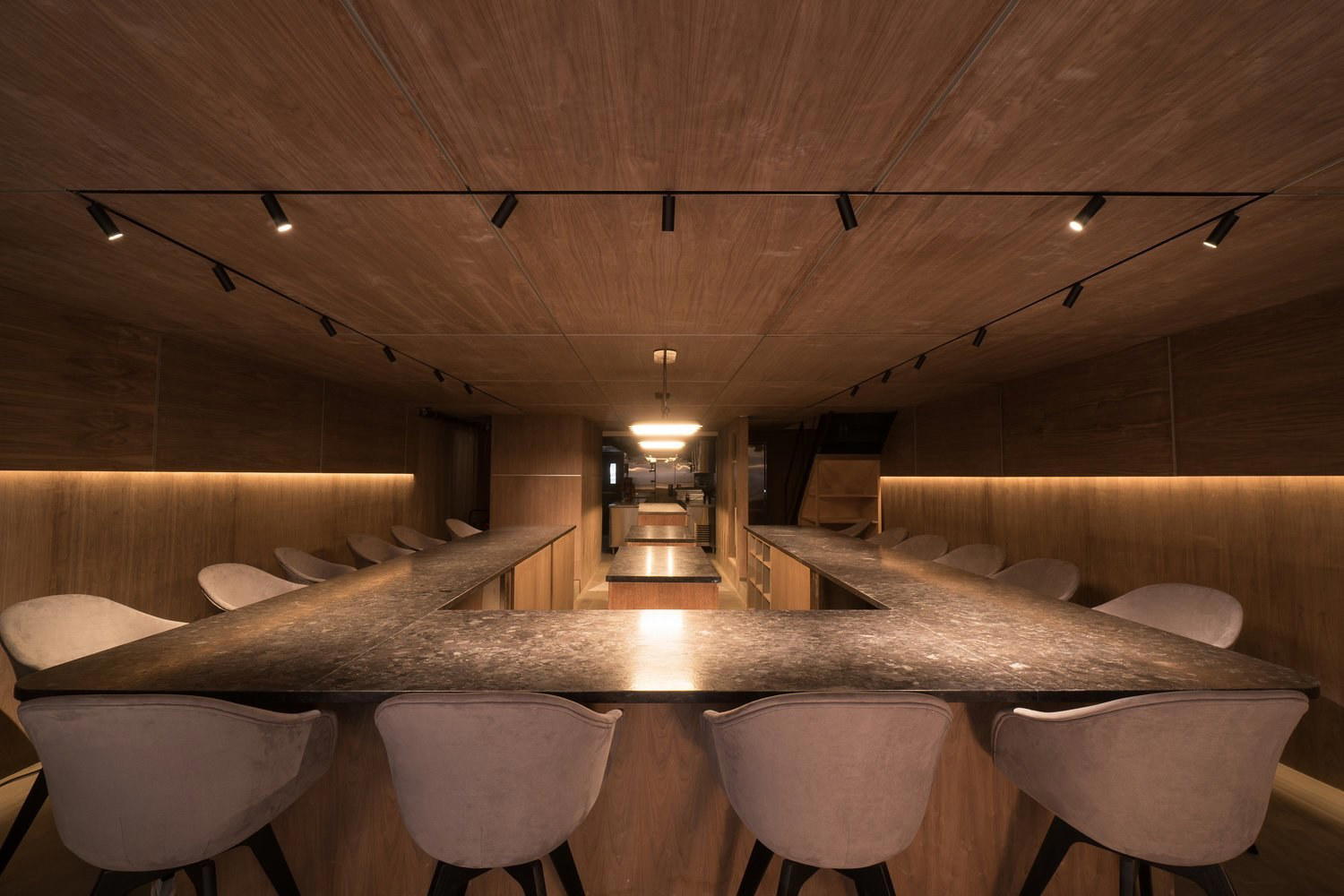
What draws people back, again and again, is not the surprise of that first visit. It is something more durable. The 14-seat U-shaped counter in the basement creates a particular kind of collective attention among diners — strangers oriented toward the same progression of courses, the same handwritten cards, the same quietly authoritative service. Regulars describe the rhythm of a meal here as unusually consistent for a tasting menu format, where evolution of the menu does not disrupt the underlying structure of how an evening unfolds. That structure, rather than any single dish, is the product.
Where Korean Fine Dining Stands Now
New York's four-star tasting menu tier has long been anchored by French and Japanese formats. Le Bernardin, Eleven Madison Park, Masa, and Per Se have each held that position for the better part of two decades, each operating within culinary traditions that Western critical institutions understood intuitively. The arrival of Korean cuisine at this same tier required a different kind of argument. Atomix, along with Jungsik New York, has made that argument in practice rather than in theory, by holding the critical and peer recognition needed to sit in that conversation without qualification.
The trajectory is documented in ranking data rather than critical opinion alone. Atomix entered the World's 50 Best at No. 43 in 2021, moved to No. 33 in 2022, then No. 8 in 2023, No. 6 in 2024, and reached No. 1 in North America's 50 Best Restaurants in 2025, making it the highest-ranked US-based restaurant on that list. Opinionated About Dining, which aggregates critic and industry votes across North America, ranked it No. 8 in 2023, No. 5 in 2024, and No. 4 in 2025. La Liste scored it 96 points in 2025. The convergence across methodologically different ranking systems is the more significant signal: these are not systems that reward the same thing, and Atomix scores highly on all of them.
Three Michelin stars and the 2025 James Beard Award for Outstanding Hospitality complete the picture. The James Beard award is the more telling of the two for understanding what keeps this room full: it recognises the guest experience as a whole, including the service cadence, the ceramics, the course cards, and the single-seating format that ensures the kitchen's attention is not divided across multiple turns.
The Counter, the Cards, and the Structure of Return
The ground floor bar, which handles cocktails at a level that warrants the stop independently, leads down to the dining counter. The basement setting removes the ambient distractions of street-level Manhattan, creating a controlled environment that the format requires. Fourteen seats means a single seating per evening. There is no secondary booking to turn the room.
Each of the twelve courses arrives on bespoke ceramics, accompanied by a small card that identifies ingredients, regional origin, and the specific Korean culinary context the dish draws from. This is not decoration. For a diner returning for a second or third visit, the cards serve as documentation of how the menu has evolved — what has stayed, what has shifted, which seasonal ingredient has replaced another. The menu changes, but the discipline of that documentary framework does not. Dishes referenced across multiple review cycles have included lamb with deodeok (a Korean root vegetable), cherry blossom trout with Korean mustard and rhubarb, tteok-galbi with chocolate and chopi, halibut with sea urchin and rice porridge, and wagyu contrasted with cold noodles. The range signals a kitchen working across Korean flavor registers without flattening them into a single idiom.
The cultural reach extends further than menu execution. Atomix operates in the specific context of Korean culture's broader international moment. Korean cinema, music, television, and food have all moved from niche to mainstream global attention over the past decade, and that shift has created an audience for Korean fine dining that did not exist at the same scale when the restaurant opened. Atomix predates much of that peak attention and was positioned to receive it on its own culinary terms, rather than riding it as a marketing opportunity.
The Park Family and the Wider Network
Chef Junghyun Park and his wife Ellia Park, who runs the business operations, have built a four-restaurant operation in New York: Atoboy (the more casual predecessor), Atomix (the flagship), Naro (focused on more traditional Korean dishes), and Seoul Salon (drinks-led). The network matters for understanding Atomix's position: it is not a single-venue project but the leading expression of a coherent culinary program. That context explains why the hospitality at Atomix reads as institutionally grounded rather than performative. The Parks have developed service culture across multiple formats and price points, and Atomix inherits the depth of that practice.
The comparison to other elite tasting menu addresses in the city is instructive. Where Le Bernardin operates within a French seafood tradition refined over decades, and Masa within a Japanese omakase format that carries its own well-understood vocabulary, Atomix is simultaneously working within Korean tradition and translating that tradition for an international dining audience that may have no prior reference point. The course cards exist partly for this reason. They are a hospitality decision as much as an educational one.
Comparable programs of Korean fine dining exist outside New York. Hansik Goo in Hong Kong operates in a similar register of Korean technique applied to fine dining. The international spread of these programs reflects the same cultural moment, but Atomix remains the address against which others in the category are measured, partly because of the ranking data and partly because the format has been running long enough to have a documented record of evolution.
Planning a Reservation
Atomix takes reservations in advance and, given the 14-seat capacity and single-seating format, the booking window requires planning. The restaurant operates Tuesday through Sunday, with seatings beginning at 5:30 PM. Monday is closed. The price tier is $$$$, consistent with the other three-Michelin-star tasting menu addresses in the city. The NoMad address (104 East 30th Street) is accessible from multiple subway lines and direct by taxi or car service from Midtown or downtown Manhattan.
For those building a broader New York itinerary around a meal here, see our full New York City restaurants guide, our full New York City hotels guide, our full New York City bars guide, our full New York City wineries guide, and our full New York City experiences guide.
For context on the broader US fine dining tier that Atomix now leads, comparable benchmark addresses include Alinea in Chicago, The French Laundry in Napa, Single Thread Farm in Healdsburg, Lazy Bear in San Francisco, Providence in Los Angeles, and Emeril's in New Orleans , a range that maps the range of ambitions and formats across American fine dining, and against which Atomix's North America No. 1 ranking can be read in full context.
A Minimal Peer Set
A quick peer snapshot; use it as orientation, not a full ranking.
| Venue | Notes | Price |
|---|---|---|
| Atomix | This venue | $$$$ |
| Le Bernardin | French, Seafood, $$$$ | $$$$ |
| Masa | Sushi, Japanese, $$$$ | $$$$ |
| Per Se | French, Contemporary, $$$$ | $$$$ |
| Eleven Madison Park | French, Vegan, $$$$ | $$$$ |
| Jungsik New York | Progressive Korean, Korean, $$$$ | $$$$ |
Continue exploring
More in New York City
More from Chef Junghyun Park
Browse all →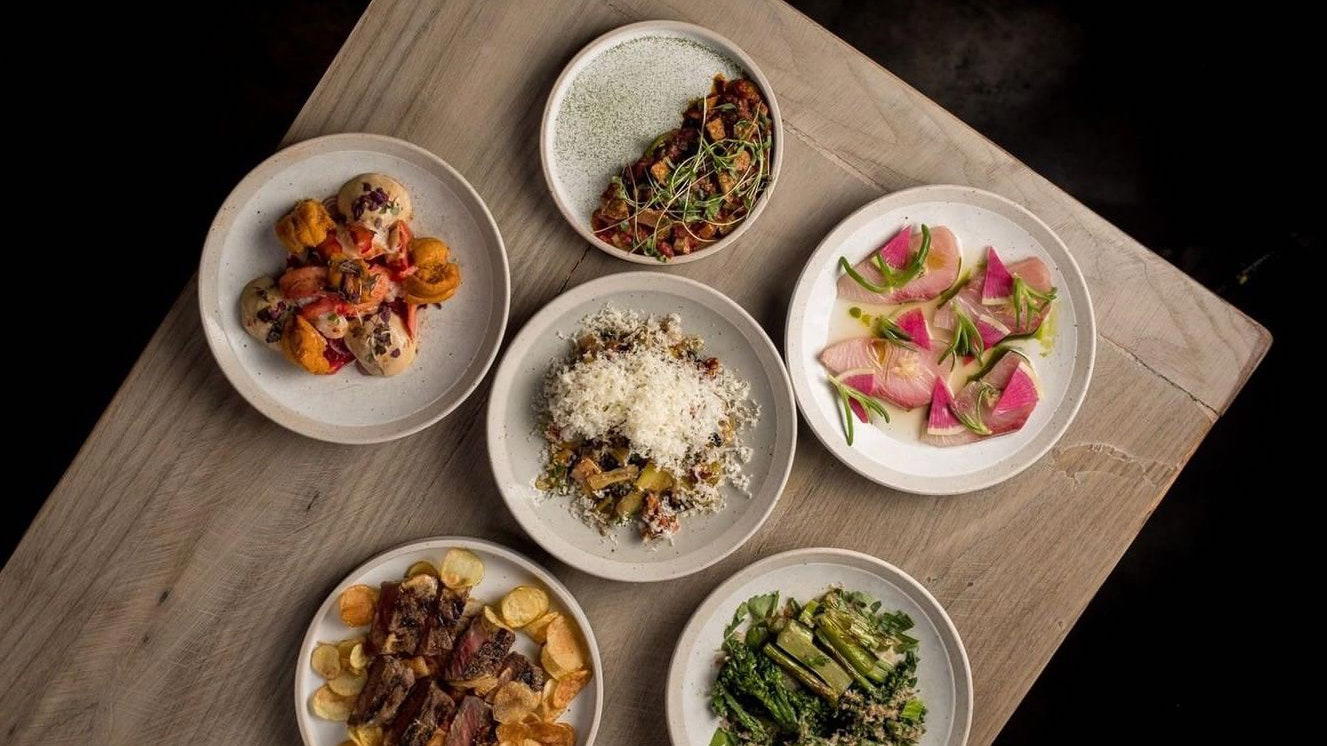
Restaurants in New York City
Browse all →
Bars in New York City
Browse all →
Hotels in New York City
Browse all →


At a Glance
- Elegant
- Intimate
- Modern
- Sophisticated
- Minimalist
- Special Occasion
- Date Night
- Chefs Counter
- Extensive Wine List
- Sake Program
Dark finishes, soothing earth tones, chic subterranean counter with warm, Zen-like atmosphere.