



<strong>Jigger & Pony</strong> sits <strong>in Singapore</strong>’s serious <strong>cocktail</strong> tier: a <strong>Tanjong Pagar bar</strong> with long-running Asia’s 50 <strong>Best Bars</strong> momentum, a 4.7 Google rating from 1,578 reviews, and an editorial-style drinks programme built around annual “menuzines.” The draw is not speakeasy concealment; it is polished hotel-lobby confidence, classic cocktail grammar, and a team comfortable turning technique into readable, social drinking.
 Discover on Pearl
Pearl is the En Primeur Club membership app — saves, bookings, and concierge access live there. Same editors, same standards.
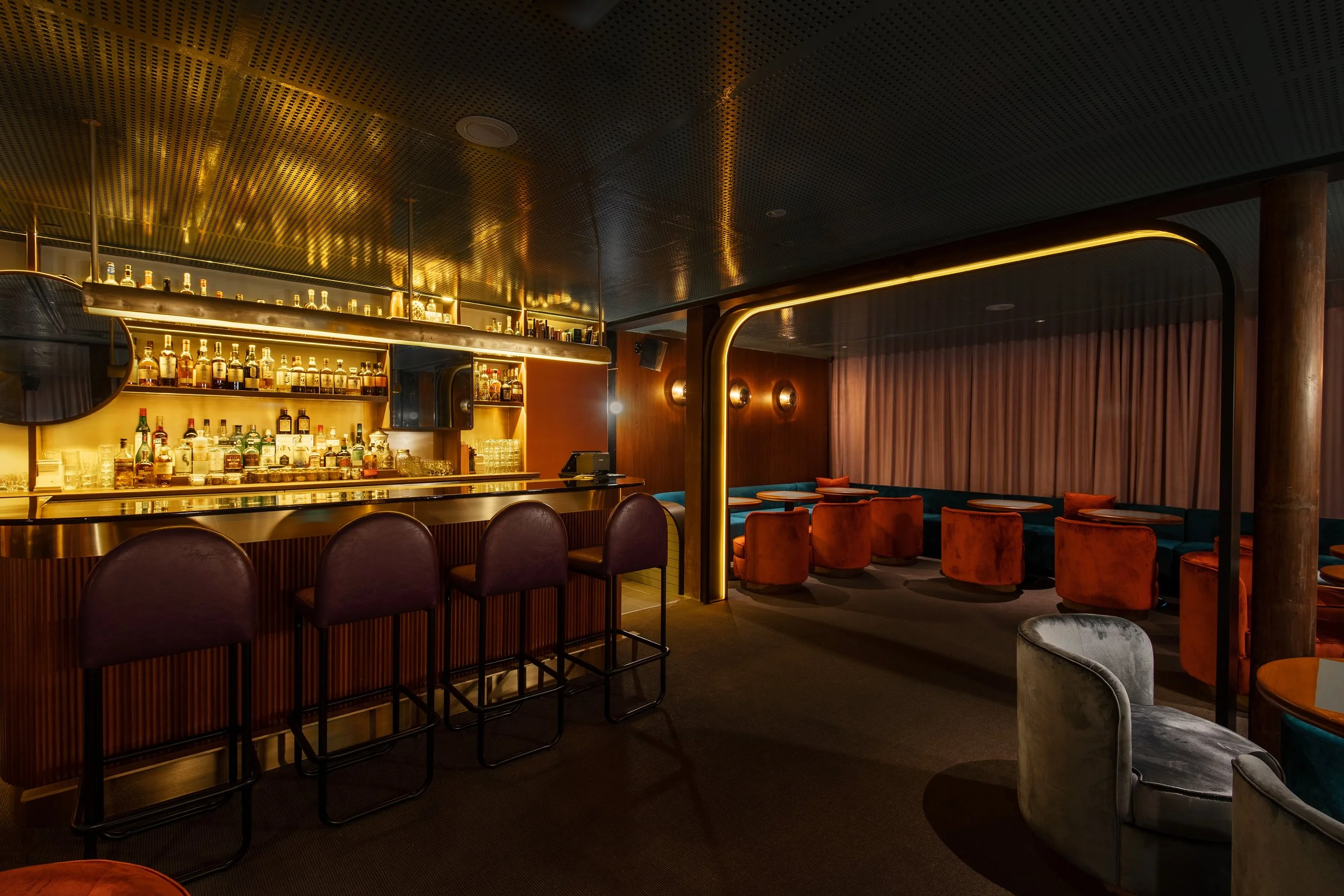
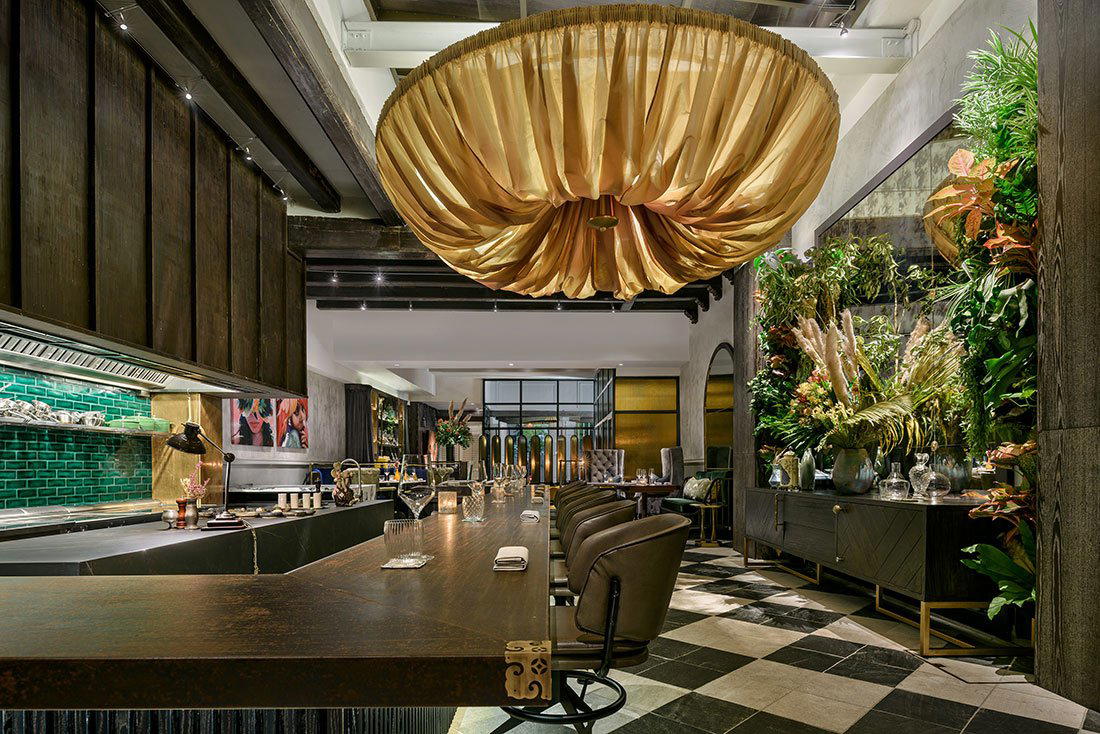
Arriving at the Amara Hotel on Tanjong Pagar Road places the night inside a particular Singapore rhythm: office towers, shophouse streets, late dinners, and hotel lobbies that become useful social territory after dark. Jigger & Pony belongs to that rhythm. The room is not built around secrecy or coded doors. Its current address, reached after the bar moved from Amoy Street in 2018, signals a mature version of the city’s cocktail culture: visible, polished, international in standard, but still shaped by the conviviality of a neighbourhood that has long mixed finance, dining, and after-work drinking.
Singapore’s bar scene has moved well beyond the old binary of hotel lounge versus hidden speakeasy. The sharper distinction now sits between bars that use design as theatre and bars that use the menu as the real argument. This is where Jigger & Pony has earned its position. The bar’s annual “menuzines” are not decorative afterthoughts; they are a format choice, turning the drinks list into a 68-page editorial object in the current Embrace edition. In a city with serious cocktail competition, that makes the programme legible before the first glass arrives.
The programme, not the pose
The useful way to read this bar is through its cocktail architecture. The drinks are described as contemporary but rooted in classics, which matters in Singapore because novelty alone has become cheap currency. A better programme shows how far a drink can move before it loses its original spine. The Embrace menuzine divides the list into sections that indicate drinking style and conceptual frame rather than simply sorting by base spirit. That structure gives guests a map without flattening the experience into a checklist.
The Embrace Change section, for instance, uses transformation as the premise. Red Revival reworks beetroot with smoky house-roasted coffee, tequila, and strawberry. That description is useful because it shows the bar’s method: vegetable, roast, agave, fruit, and smoke are arranged as a layered drink rather than a novelty garnish. Embrace Tradition takes the opposite route, using classic cocktail history as a base for adaptation. The Paloma is rebuilt with aged, slightly smoky tequila and house-made guava and pink grapefruit soda, then served with a peeled grapefruit wedge intended to add a burst of citrus when popped. These are venue-specific details, but the larger point is about category discipline. The bar is not rejecting the canon; it is editing it.
That editing instinct places Jigger & Pony in the same serious conversation as Singapore peers where the drink list carries intellectual weight. For readers comparing styles, 28 HongKong Street represents the city’s enduring speakeasy-era influence, while Atlas operates at the grand-room end of cocktail culture, where scale, architecture, and gin collecting create a different kind of authority. Analogue is closer to the contemporary sustainability and plant-forward conversation, and Anti:Dote keeps the hotel-bar format in sharper focus. Jigger & Pony sits between those poles: less hidden than the speakeasy model, less ceremonial than the palace-bar model, and more invested in the printed menu as a creative engine.
Why the awards matter here
Awards can be lazy shorthand, but in cocktail cities they also reveal staying power. Jigger & Pony has appeared across multiple editions of Asia’s 50 Best Bars and The World’s 50 Best Bars, including Asia’s Leading Bars #3 in 2025, Asia’s Leading Bars #3 in 2024, The World’s 50 Best Bars #5 in 2024, The World’s 50 Best Bars #14 in 2023, Asia’s Leading Bars #2 in 2023, and Asia’s Leading Bars #1 in 2020. It was also listed at Top 500 Bars Leading Bars #5 in 2025. That run matters because cocktail bars often burn brightly for a season, then lose their edge as staff, landlords, and guest expectations shift.
The longer sequence tells a more useful story than a single medal. It shows that the bar has remained inside the international judging conversation from its Amoy Street years through the Tanjong Pagar hotel era. The move in 2018 could have diluted the identity, as hotel settings often smooth away a bar’s sharper habits. Instead, the awards record suggests a venue that used the larger, more formal setting to widen its audience while keeping the programme recognisable. Tatler Asia’s 2025 listing places it within Tatler Leading Bars Asia-Pacific and describes it as a beacon in Singapore’s cocktail scene with innovative tipples and high-level hospitality. Strip away the ceremonial language and the signal is clear: this is not a nostalgia listing.
The public-review data points in the same direction. A 4.7 Google rating from 1,578 reviews is not a critic’s verdict, but it gives practical context. Cocktail bars with ambitious menus can alienate casual drinkers when the room becomes too self-serious. A high volume of positive guest response suggests that the hospitality side is doing work alongside the drinks. That matters in Singapore, where visitors often arrive after dinner, with mixed levels of cocktail knowledge, and expect the staff to translate a list without making the exchange feel like an exam.
Singapore's cocktail grammar has changed
Singapore’s drinking culture used to be framed internationally through hotel bars, colonial references, and the Singapore Sling. That frame is now too narrow. The city’s better bars speak several dialects at once: Japanese precision, American cocktail revivalism, tropical ingredients, Southeast Asian memory, luxury-hotel service, and a publishing instinct borrowed from restaurants, fashion, and design. Jigger & Pony’s menuzine format fits that newer grammar. It treats the menu as a piece of cultural packaging, not merely a price list.
This is also why the bar’s Tanjong Pagar location makes sense. The district is not a resort bubble; it is a working part of the city with restaurants, offices, hotels, and shophouse streets within a compact drinking radius. A guest can build an evening around dinner, then cross into cocktail territory without committing to a late-night club mood. For broader planning, Our full Singapore restaurants guide is the useful companion, while Our full Singapore hotels guide helps place Tanjong Pagar against Marina Bay, Orchard, and the heritage districts. The bar’s setting inside the Amara Hotel also makes it unusually easy to explain to taxis and ride-hail drivers, which is not a minor advantage after a long dinner.
Compared with cocktail capitals outside Asia, Singapore’s advantage is compression. A serious drinker can move between several major rooms in one night without crossing an entire metropolis. The comparison with Superbueno in New York City, Bar Leather Apron in Honolulu, or Julep in Houston is not about copying style; it is about how cities express cocktail confidence. New York often prizes speed and cultural collision, Honolulu can fold island hospitality into serious technique, and Houston reads American spirits history through a regional lens. Singapore’s version is denser and more internationally fluent, with hotel polish never far from the counter.
Hospitality as a competitive signal
Founders Indra Kantono and Guoyi Gan appear in the bar’s public story as part of its hospitality DNA, but the more important editorial point is not founder mythology. It is how Singapore’s better cocktail rooms have turned warmth into a competitive discipline. In a city where high-end service can become stiff, cocktail hospitality has to keep the room moving while preserving a sense of ease. Jigger & Pony’s stated emphasis on warm, genuine hospitality aligns with that broader shift: the drinks can be conceptual, but the room cannot feel like a seminar.
The menuzine is central to that balance. A long conceptual list can intimidate guests if it is used as a gatekeeping device. Here, the format gives staff a shared language for reading the table. A guest interested in classic structures can be guided toward Embrace Tradition; someone open to stranger turns can move into Embrace Change. The categories do the first round of interpretation, which lets the service feel conversational rather than scripted. That is a practical advantage, not just a design flourish.
Price information is not available in the supplied venue record, so the safer assumption is category-based rather than numeric: this belongs to Singapore’s premium cocktail tier, supported by Asia’s 50 Best Bars and World’s 50 Best Bars recognition, not to the casual happy-hour bracket. Travellers should plan accordingly, especially if the evening includes dinner elsewhere. For a wider drinking itinerary, Our full Singapore bars guide gives the broader field, while Our full Singapore experiences guide is useful for building the non-restaurant parts of a trip. Our full Singapore wineries guide is a narrower category, but it helps clarify how wine-led and cocktail-led nights differ in a city better known for bars than vineyards.
What to order when the menu does the talking
The temptation in an awarded cocktail bar is to ask for a signature and surrender the evening to reputation. A better approach here is to choose by section. If the point of the night is to understand the bar’s relationship with classics, the Paloma from Embrace Tradition gives a clear read: tequila, citrus, house soda, and a small interactive citrus detail. If the goal is to see how far the team will push a drink while keeping it coherent, Red Revival from Embrace Change gives the sharper test, using beetroot, coffee, tequila, and strawberry as the argument.
Those two examples also show why the bar’s programme has travelled well in awards language. The drinks are not presented as random theatre. They have a premise, a technique, and a reference point. In a city where many rooms can make an accurate Martini or Negroni, the difference comes from editorial control: what the bar chooses to explain, what it leaves intuitive, and how much conceptual weight the glass can carry without becoming heavy.
For mixed groups, this is likely the safer Singapore cocktail choice than a narrow specialist room. The classics-rooted side gives less experimental drinkers a foothold, while the conceptual sections give enthusiasts something to parse. That dual audience is hard to serve well. Bars that chase only novelty exhaust guests; bars that protect only tradition risk becoming museums. Jigger & Pony’s public record suggests a more flexible middle: serious enough for ranking bodies, accessible enough to sustain broad review volume, and social enough to suit a hotel-lobby setting.
Planning the night
The listed address is 165 Tanjong Pagar Road, Amara Hotel, Singapore 088539. The awards record also gives the venue website as http://www.jiggerandpony.com and phone number as 9621 1074. Because the supplied record does not include opening hours, booking method, dress code, or seat count, those details should be checked directly before making firm plans. In practical terms, the award history alone is reason to avoid treating it as a casual walk-in after peak dinner hours, especially on weekends or during major travel periods in Singapore.
The Tanjong Pagar setting rewards a simple evening structure. Dinner nearby, cocktails at the hotel, then a second bar only if the group still has appetite for comparison. That sequence suits the neighbourhood better than a frantic crawl, because the bar’s menu asks for a little attention. It is not a room that needs to be overplanned, but it benefits from arriving with enough time to read, ask questions, and let the first drink set the direction.
Visitors staying elsewhere in Singapore should treat this as a destination within the central city rather than a remote excursion. The Amara Hotel address is clear, the neighbourhood is well served by taxis and ride-hailing, and the surrounding area has enough dining density to make the stop efficient. The main planning issue is not geography; it is timing. A bar with this awards profile and review volume can absorb a wide audience, but serious cocktail travellers should avoid expecting instant seating at peak social hours.
Comparable Options
A quick peer reference to anchor this venue in its category.
| Venue | Cuisine | Price | Notes |
|---|---|---|---|
| Jigger & Pony | This venue | ||
| Native | |||
| 28 HongKong Street | |||
| Analogue | |||
| Anti:Dote | |||
| Atlas |
Continue exploring
More in Singapore
Bars in Singapore
Browse all →
Restaurants in Singapore
Browse all →
At a Glance
- Elegant
- Sophisticated
- Cozy
- Intimate
- Modern
- Date Night
- Special Occasion
- After Work
- Speakeasy
- Design Destination
- Hotel Bar
- Seated Bar
- Lounge Seating
- Classic Cocktails
- Craft Cocktails
- Zero Proof
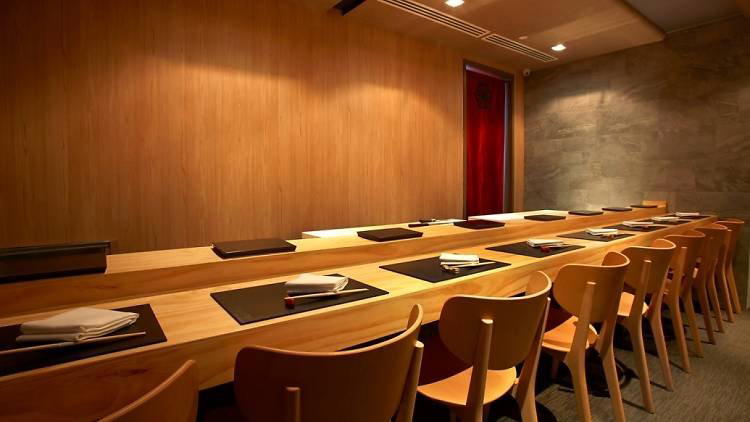
Dimly lit with mood lighting, warm and elegant atmosphere featuring soft jazz music, cozy and buzzing with energy.